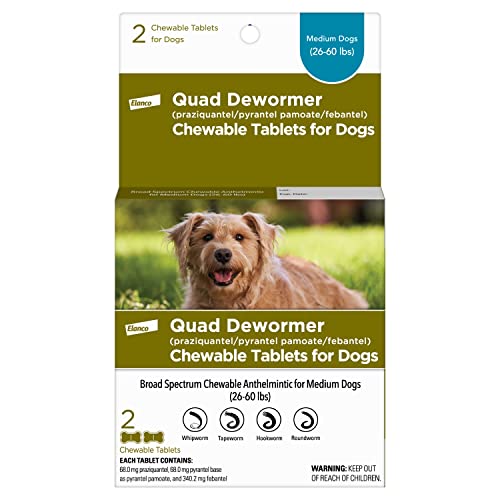
Dog deworming is an essential part of pet care, ensuring your furry friend stays healthy and free from harmful parasites. Worm infestations can lead to serious health issues, making regular deworming a crucial preventive measure. In this article, we’ll explore the most searched topics around dog deworming, including the best dewormers, symptoms of worm infestations, and how to protect your pet year-round.
Why Dog Deworming Is Important
Dogs are prone to various types of worms, including roundworms, hookworms, whipworms, and tapeworms. These parasites can cause digestive issues, weight loss, and even severe infections if left untreated. Regular deworming helps eliminate these parasites and prevents reinfestation.
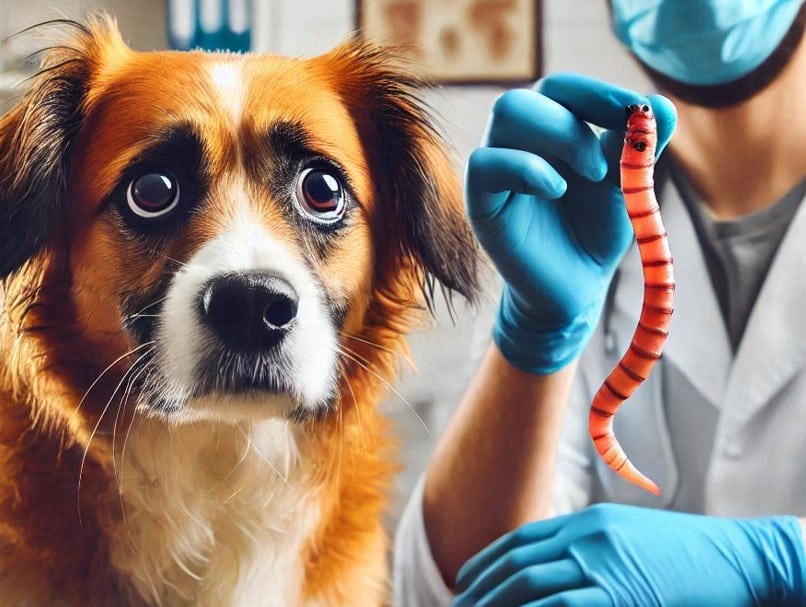
Dog Deworming: HELP! My Dog Has 5 Worms Coming Out Of His Butt! 5
Signs Your Dog Needs Deworming
If your dog exhibits any of the following symptoms, it may be time for deworming:
Visible worms in stool
Diarrhea (possibly with blood)
Vomiting
Weight loss
Dry, dull coat
Lethargy
How Often Should You Deworm Your Dog?
Veterinarians recommend deworming puppies every two weeks until they are three months old, then monthly until six months. Adult dogs should be dewormed at least every three to six months, depending on their lifestyle and risk factors.
Preventing Worm Infestations
To minimize the risk of worm infestations, follow these preventive measures:
Keep your dog’s living area clean.
Dispose of feces promptly.
Avoid letting your dog eat raw meat or prey animals.
Use flea prevention, as fleas can transmit tapeworms.
Schedule regular vet check-ups.
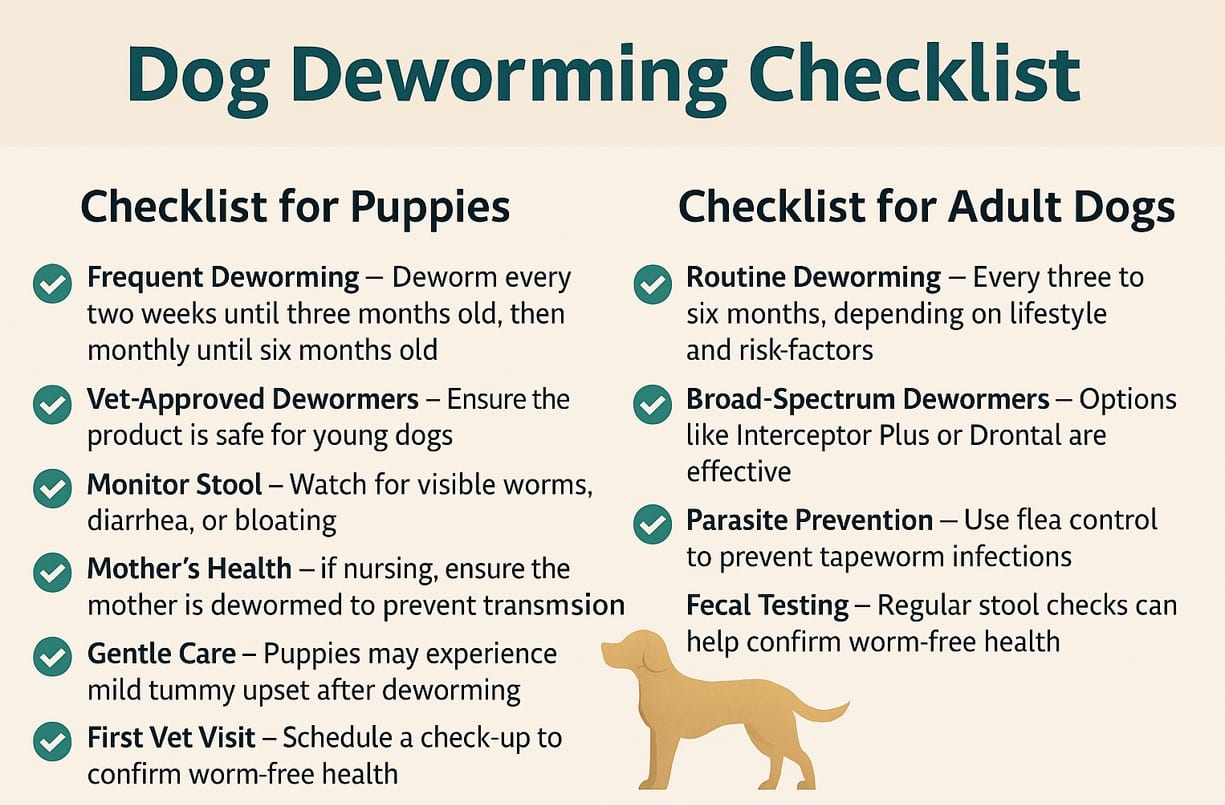
Dog Deworming Checklist:
Here’s a helpful checklist for dog owners to ensure effective deworming and parasite prevention:
✅ Know the Signs – Watch for symptoms like vomiting, diarrhea, weight loss, or visible worms in stool.
✅ Follow a Deworming Schedule –
Puppies: Deworm every 2 weeks until 3 months old, then monthly until 6 months.
Adult Dogs: Deworm every 3–6 months, depending on lifestyle and risk factors.
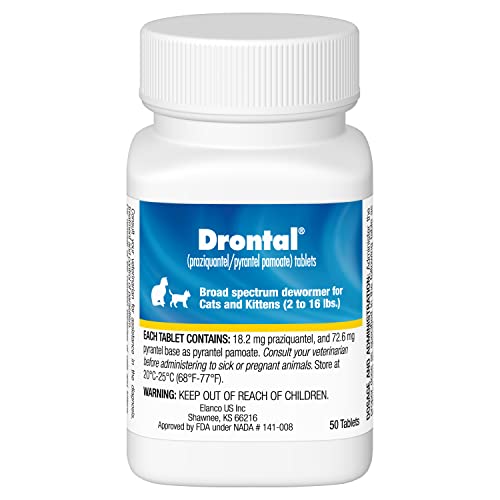
✅ Choose the Right Dewormer – Select a broad-spectrum dewormer recommended by your vet. Popular options include NexGard Plus, Interceptor Plus, and Drontal Plus. All-natural chewable treats are great too, Worm Defender is the best.
✅ Administer Treatment Properly – Follow dosage instructions carefully and ensure your dog consumes the full dose.
✅ Monitor After Deworming – Watch for potential side effects like mild diarrhea or vomiting, and consult your vet if symptoms persist.
✅ Prevent Reinfection –
Dispose of feces promptly.
Maintain a clean living environment.
Use flea prevention to reduce tapeworm risk.
Avoid raw meat and prey animals that may contain parasites.
✅ Schedule Regular Vet Visits – Your vet can assess your dog’s health and recommend the best deworming schedule.
✅ Protect Other Pets – If one pet has worms, ensure all pets in the household receive appropriate treatment.
Checklist for Adult Dogs
Routine Deworming – Every three to six months, depending on lifestyle and risk factors.
Parasite Prevention – Use flea control to prevent tapeworm infections.
Fecal Testing – Regular stool checks can help confirm parasite-free health.
Hygiene & Environment – Maintain a clean living area to reduce exposure to contaminated soil or feces.
Checklist for Puppies
Frequent Deworming – Deworm every two weeks until three months old, then monthly until six months old since puppies are highly susceptible.
Vet-Approved Dewormers – Ensure the product is safe for young dogs
Monitor Stool – Watch for visible worms, diarrhea, or bloating, which can signal infestations.
Nursing – If the puppy is nursing, ensure the mother is dewormed to prevent transmission.
Gentle Care – Puppies may experience mild tummy upset after deworming, so keep an eye on hydration and comfort.
First Vet Visit – Schedule a check-up to confirm the puppy is free from worms and develop a tailored deworming plan.
Dog Deworming: HELP! My Dog Has 5 Worms Coming Out Of His Butt! 6
Conclusion
Dog deworming is a vital aspect of pet health, ensuring your canine companion stays happy and parasite-free. By recognizing symptoms early, choosing the right dewormer, and following preventive measures, you can protect your dog from harmful worms and maintain their overall well-being.
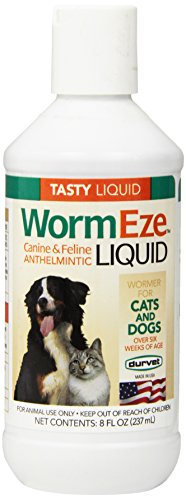
Cat Dewormer vs Dog Dewormer. After giving a dewormer treatment to your kitty, she gets worm-free, but your dog needs deworming too. If there is still a part of the treatment left you can be tempted to just give it to your pup. Is cat dewormer the same as dog wormer? Although you may find that the ingredients of dog and cat wormer treatments are mostly the same. Active ingredients like praziquantel are currently available under different brand names. They can be found in both dog deworming and cat deworming treatments.
Can I Use Cat Worming Treatment As A Dog Dewormer? 15
So, Can You Use Cat Dewormer on Dogs?
Just because the active ingredients are the same does not mean that it is a good idea to use cat dewormer on dog or vice versa. The difference is in the amount of ingredients utilized. The dosing amount may also vary contingent on the size of the pet.
There are a wide array of preventative treatments available for worms for dogs and cats. But while dogs can be treated with the aid of an injection once they are infected, cats cannot be treated the same way if they get worms.
There are certain cases, where the treatment that is effective on dogs can be poisonous for cats. So, it is always the better option to let your veterinarian suggest worming treatments for your dog and cat rather than treating them yourself. Dont just start giving your cat dewormer to dogs. Worming treatments for kitties is available but worm treatment is a different ball game altogether. Remember, prevention is better than cure. The treatment not only is very tedious but also quite expensive.
It is also very important to understand that there are different intestinal worms that can affect your dog and cat before you use cat dewormer on dogs
So, never give one treatment that is specifically for treating a particular worm for another worm. For example; if your kitty has roundworms and your dog has tapeworms, never give the treatment that works to eradicate roundworms to treat tapeworms. Hence, before getting a deworming treatment, consult with your veterinarian who would determine the type of worm that has affected your pet, and then provide appropriate treatment and advice on dosage amounts.
The best possible way to counter the worm problem in dogs and cats is by taking preventative measures to keep them from getting any type of worm in the first place. Remember, kittens and puppies can be born with worms. They get it from their mothers when they nurse. That is the reason routine veterinary puppy and kitten care includes worm treatment. Protection is way better than thinking can you give dogs cat dewormer or something like that.
After a year, ask your veterinarian to test your pet’s stool to ensure that there is no presence of worms. Also ensure that they do not eat birds, mice or other animals that could be carrying worms. Also, get rid of fleas because that is the first big step to preventing worms in dogs and cats.
Conclusion
This is valuable information on the differences between cat and dog deworming treatments. It will clear up your question of can you use cat wormer on dogs. It emphasizes the importance of understanding the specific needs of each pet. Here’s a breakdown of the key points:
Shared Active Ingredients: The article acknowledges that cat and dog dewormers often share active ingredients, such as praziquantel. However, it emphasizes that simply because the active ingredient is the same doesn’t mean the treatment is interchangeable between cats and dogs. That is why you can’t give cat dewormer to dogs.
Differences in Dosage and Formulation: The article highlights that the amounts of ingredients used and the dosing may vary based on the size of the pet. This is an important consideration, as cats and dogs come in different sizes and may require different concentrations of the deworming medication.
Treatment Variations: The article notes that there is a wide array of preventative treatments available for both dogs and cats. It distinguishes between the ease of treating dogs with injections once infected, as opposed to the more complex approach required for treating cats.
Caution Against Self-Treatment: A crucial point is made about the potential toxicity of certain treatments for one species when administered to the other. The article strongly advises against self-treatment and recommends consulting a veterinarian for appropriate worming treatments for both dogs and cats. Protection is way better than thinking is cat dewormer safe for dogs.
Specificity of Worm Types: The article rightly emphasizes that there are different types of intestinal worms that can affect dogs and cats. It warns against using a treatment for one type of worm to treat another, underscoring the importance of consulting with a veterinarian to identify the specific worm infestation and prescribe the appropriate treatment.
Preventative Measures: The article advocates for preventative measures, especially for kittens and puppies who can be born with worms acquired from their mothers. Routine veterinary care is recommended, including deworming treatments. Clearijng the doubt of can you give cat dewormer to dogs and vise versa. Regular stool tests and flea prevention are also suggested to maintain a worm-free environment for pets.
Holistic Approach to Prevention: The article concludes by emphasizing a holistic approach to prevent worm problems in dogs and cats. This includes avoiding exposure to potential carriers of worms, such as birds and mice, and addressing flea infestations as a preventive measure.
Natural and effective dog dewormer without Rx. Treat & control roundworms, hookworms or tapeworms in your dog with these bacon-flavored treats for dogs. Keep your dog healthy and worm-free with Worm Defender for dogs.
Responsible pet ownership requires a lot of dependability, knowledge, and consideration; unfortunately, some new pet owners take this responsibility very lightly.
So, before you take home your new dog or cat, consider the following pet care tips to ensure that you are providing your new friend with the right amount of care and just the right amount of love! Your new companion is relying on you to provide it.
Dogs
Whether your new pet is just a puppy or an adult dog, you have a challenge ahead of you to practice responsible pet ownership and awareness. Your home is new territory, and you are now your pet’s primary caregiver. Both kindness and a firm yet reassuring approach to your new dog will go a long way. Ensure that he knows you’re ready to give him the love he deserves by creating a canine-friendly atmosphere and integrating these pet care tips into his routine.
Crate training and housebreaking: Two very important stages in your dog’s life. Crate training, should you choose this method, gives your pet a quiet, safe place to retreat to at bedtime or whenever you leave the house. If you want to prevent chewing or scratching, crate training might be necessary in the beginning. Housebreaking is just a matter of routine – think of a word you want your dog to associate with going to the bathroom outside and use it repeatedly. Take your dog outside multiple times, normally after meals or water breaks, and he’ll soon make the connection.
Flea and tick prevention: Without preventative measures and an ounce of responsible pet ownership, your home could become infested or your dog could become extremely ill. Most vets can provide you with products that eliminate fleas and ticks on your dog. Available orally or in a liquid form placed on the back just once a month, your dog will be able to repel fleas, ticks, and parasites regularly.
Shots and preventative vaccines: Dogs suffer from many terrible diseases that are often fatal if not treated or prevented at the outset. Vaccination is one of the most important pet care tips that can be provided – and one that should be heeded. Rabies, distemper, heartworms, and parvovirus are some of the worst viruses that can afflict your dog – your vet will discuss which shots your pet receives at each yearly check-up to prevent these agonizing diseases.
Spaying or neutering: Similar to yearly vaccinations, highlighting the need for spaying or neutering play into vital pet care tips. Gone unmonitored, two dogs can produce over 4,000 offspring in seven years. Sadly, a large number of these dogs will be euthanized or left to fend for themselves on the street. Spaying or neutering, a major part of responsible pet ownership, ensures your pet will be healthier in the long run, and you will have prevented the birth of more unwanted puppies.
Obedience training: Your dog desires structure. Teaching him the basic commands yourself or enrolling him in an obedience or training course gives him a level of organization in his life. Furthermore, teaching him certain commands also ensures that he will be a well-behaved, functioning member of your family within your home. Purchase a book offering pet behavior and pet care tips, such as My Smart Puppy by Brian Kilcommons and Sarah Wilson or Dog Talk by John Ross. These two books will give you a better idea of responsible pet ownership and how to approach certain situations with your new dog.
Cats
Unlike dogs, cats are much more independent, needing perhaps less of your attention. Cats, however, rely on you for the same necessities that a dog expects. If problematic behaviors pop up, contact your local animal shelter or animal welfare organization for more pet care tips. Most likely, literature on both dog and cat care will be provided upon request.
In any case, to help your cat be a happier, better-behaved feline, consider the following more important pet care tips:
A clean litter box: If your cat lives inside, you will need to clean and/or empty his litter box at least twice a day. Every week or so, you’ll also need to dump the litter out entirely and wash his box with hot, soapy water to reduce the spread of bacterial growth. This task can be easy to forget, but cats are clean animals. For a cat, this is one of the more important pet care tips – ensuring his area is always clean. The location of his box is important – keep it out of high-traffic areas and away from his food. To help him learn to use his litter box, show him where it is four to five times a day and encourage him to use it, praising him when he uses it or even just digs.
Flea and tick prevention: Fleas and ticks can make your new pet very sick and can introduce parasites into the bloodstream. Practice responsible pet ownership! Prevent this from occurring by purchasing flea and tick preventative products from your vet. Flea powder and a quick sweep of the vacuum through your house is also an excellent guard against fleas or ticks. However, if you do opt to buy products online or at the store, be cautious and practice responsible pet ownership by checking the labels and warnings if any – some preventative measures are harmful to cats.
Spaying or neutering: As important for cats as it is for dogs! Responsible pet ownership dictates that you have your cat spayed or neutered when s/he is between six and eight weeks old if possible. Not only will you help prevent pet “overpopulation,” but you will reduce the potential for other cancers and diseases that may occur if your cat is not surgically altered.
Shots and preventative vaccines: Cats are susceptible to a variety of fatal and painful diseases. Without vaccinations and a nod to responsible pet ownership, they will likely die or have medical issues throughout their lives. Much like the recommendation for dogs, vaccination for cats is one of the most important pet care tips. Rabies, FeLV (Feline Leukemia), FIV (Feline Immunodeficiency Virus), and distemper are some of the worst – however, with a regular check-up and shots from your vet and just a bit of responsible pet ownership, you have nothing to worry about!
Be a Knowledgeable Pet Owner
You now have a big responsibility on your hands. Your new cat or dog ultimately relies on you to provide him with the necessities of life, and it is your job as a responsible, knowledgeable pet owner to ensure that he has a happy, healthy life by incorporating a routine into his life and following the pet care tips that have been outlined above.
Do your research and talk to other pet owners to get other helpful pet care tips! Your pet has basic needs that must be fulfilled by you. Of course, he needs a ready supply of cool drinking water, healthy dog or cat food, shade or shelter, and grooming on a regular basis, but he also expects you to create a loving home and warm environment and to keep him healthy and happy.
With just a little awareness of what to expect coupled with responsible pet ownership, you’ll be ready to give your new companion lots of love and a happy home!