Heartworm is one of the most common of the parasites your dog can contract, they can become very ill and treatment is expensive. Prevention is simple and can be done inexpensively. Heartworm is passed from the bites of mosquitoes and the larvae gets into the heart. As they mature the adults block the valves. Generic heartgard is an option to consider when seeking medication for your dog.
Heartworm pills all serve the same purpose, to kill larvae and prevent them from maturing into adults in your dog’s body. They come in a chewable form and are given monthly to prevent infestation. They are also available in a hard tablet that can be mixed in with food or in a liquid form.
The benefit of heartworm prevention is that it will work well and should be started when your puppy is as young as 12 weeks old. Preventing heartworm is much easier than curing it and it is more common in warmer climates that have a long mosquito season. There are also medications that can keep mosquitoes away from your pet.
Before starting treatment discuss options with your vet, your dog should be tested first to make sure that they are not already infected. Killing off large numbers of adult worms can be deadly to your dog. Some breeds are also sensitive to the active ingredient in the pills and could have serious side effects.
Considerations in heartworm medications should include that they are vet recommended or approved, the size should be approved, find out if you need a medication that also controls fleas and ticks, see if it is safe and effective, find out what the ingredients are, determine the cost, ask if there is a guarantee and what is the dosage should be. The ideal medication is easy to administer, is safe and effective and available at a reasonable cost. It should be the right dosage for the size of your pet and if applicable provide protection for the prevention of fleas and ticks.
Some of the top products on the market that prevent heartworm and protection against roundworms include Interceptor, Heartgard and Heartgard Plus, Pro Heart6 and Filarabits. For the prevention of fleas and heartworm there is a medication called Sentinel. To control fleas, ticks and heartworm you can ask for Revolution.
Ivermectin is one of the generic heartworm pills, it’s active ingredients are found in Heartgard, Valuheart, Iverhart and Trihart. It is very inexpensive. Ivermectin works against heartworms and mites and some lice. It is a broad spectrum anti-parasitic that works by changing the nervous systems and muscle function of the heartworms. It is available without a prescription.
Another great medication for your dog is K9 Advantix. It controls fleas, ticks and mosquitoes in dogs within 12 hours. It is a very effective medication to keep your dog safe from ticks and mosquitoes. It has long term effects and works even after giving your dog a bath. Another medication for you pet is Petcam. It is used to control pain in dogs, Meloxicam is the main ingredient. Generic heartgard and other pet medications can be purchased online but a vet should oversee any administration of medications for your pet.
The first thing you should know is that blood in dogs urine and stool can be attributed to many different causes with some causes being serious and life-threatening while others are illnesses that are treatable.
Parasites or worms are something common in dogs and puppies. Most puppies have roundworms and need worming at about five weeks of age. They can also have hookworms and other types of parasites. Hookworms can also be present in adult dogs causing blood in stool dog. The hookworm attaches itself to the lining of the intestines and sucks out the blood for the nourishment it needs to live resulting in dog with bloody stools.
Injury from a fight can cause internal bleeding. Possibly your dog got out of the yard and met up with another dog resulting in a fight. Your dog might have sustained internal injuries causing him to bleed resulting in dog peeing and pooping blood.
Prostate problems in older male dogs result in bloody stool in dogs. An enlarged prostate can be caused either by a prostate gland infection or prostate cancer.
Additional causes of blood in dogs urine and stool:
1. A blood disorder or a dog with a slow clotting type of blood similar to a hemophiliac but not as severe.
2. Bladder or kidney stones.
3. Your dog might have gotten into the poison the exterminator put down for rodents. The type of poison for rats and mice causes internal bleeding and death.
4. An infection of the uterus is common in females after having a litter.
5. A canine urinary tract infection.
When to See a Vet?
Dog peeing and pooping blood should not be taken lightly, so make an appointment to have your dog examined by a vet. It has been documented that once a dog has had an infection or urinary problem the odds of it happening again are much greater.
Once the vet examines your dog and confirms the diagnosis that it is a urinary tract infection, you must discuss the kind of treatment to be administered. You can choose the conventional antibiotic treatment that carries adverse side effects that can be more dangerous than the illness or a natural remedy that is safe and effective. There are also over-the-counter supplements that can aid in post-UTI treatments so possible reoccurrence can be prevented.
Recommended Actions
Symptom or Cause
Recommended Action
Parasites (Roundworms, Hookworms)
If your dog’s got the “wormy” business going on, don’t wait! Call up your vet and get them on a deworming plan. Better safe than sorry!
Prostate Issues (Older Male Dogs)
If your older guy’s having issues, it’s time for a prostate check-up. No need to wait till things get worse—make that vet appointment!
Blood Disorders
Blood in your dog’s stool or urine? That could be something more serious. Get them checked out so you’re not guessing or waiting for things to spiral.
Bladder or Kidney Stones
Stones don’t just go away! Get your dog to the vet for an X-ray or ultrasound. Surgery might be in the cards, but better to know now than later.
Poison Ingestion
If you suspect your dog ate something toxic—don’t waste any time! Get to the vet immediately. Poison can turn deadly fast, so don’t wait for symptoms to get worse.
Uterine Infection (Post-Litter)
If your female dog’s been through a litter recently and seems off, don’t ignore it. Get her checked out pronto! A uterine infection can get ugly if left untreated.
Urinary Tract Infection (UTI)
You don’t want to wait around with a UTI—it’s painful and can get worse fast. Call the vet, get the antibiotics, and help your dog feel better, faster.
Injury or Trauma
If your dog’s had a rough encounter (or accident), don’t play it cool. Get them to the vet ASAP. You can’t always see internal damage right away.
Recommended Actions
Summary
Why is my dog peeing and pooping blood? There are many causes of blood in dogs urine and stool, some of which are serious and life-threatening, while others are treatable. Parasites, injury, prostate problems, blood disorders, bladder or kidney stones, poison, uterine infection, and urinary tract infection are some of the causes. If you notice dog pooping and peeing blood, it is important to take them to the vet to get a diagnosis and treatment.
Here are some additional details about each of the causes:
Parasites: Roundworms, hookworms, and other parasites can cause blood in stool dog.
Injury: Internal bleeding from a fight or other injury can cause dog blood in urine and stool.
Prostate problems: An enlarged prostate can cause blood in the dog’s urine or stool.
Blood disorders: A blood disorder or a slow clotting type of blood can cause blood in dogs urine and stool.
Bladder or kidney stones: Bladder or kidney stones can cause blood in a dog’s urine.
Poison: Eating poison can cause blood in the dog’s urine or stool.
Uterine infection: A uterine infection can cause dog pooping and peeing blood after having a litter.
Urinary tract infection: A urinary tract infection is the most common cause of dog peeing and pooping blood.
If you notice dog blood in urine and stool, it is important to take them to the vet to get a diagnosis and treatment. Early treatment is important to prevent serious health problems.
To some people getting a new puppy is very important thus require plenty of planning and preparation. Buying puppies for sale meant commitment and if you are someone who can’t commit even to the simple needs of a dog then don’t think about buying one. However there are people who are always excited about buying or adopting a dog. There are so many things you need to consider before you purchase a puppy. Bringing a furry friend home can be both exciting and a little bit crazy.
If this is going to be your first time to purchase a puppy, then you don’t have any idea what awaits you after bringing it home. Some people fear that a dog specifically puppies will may not last long in your care. If you previously own a dog, then there is a fear that this one may not live up to the standards of your previous pets. Although you can be 100% perfect about choosing the right pet caring for it, it may help if you follow these puppy selection tips:
1. Make sure everything agrees about buying puppies for sale because as much as these furry creatures are cute, they require proper care and is considered as a big responsibility. Many people said that a dog is a child’s responsibility but the truth is, everyone in the household must take care of it. If dogs needs plenty of care, how much more a puppy? Some pups need attentive grooming and requires plenty of attention. If everyone can’t deal with a small dog, then choose another pet to purchase.
2. Be cautious with the breed of puppy to buy. Take notice about the advantages and disadvantages of buying purebreds. Although they are the type of dogs that are very predictable, they are also very expensive.
3. Speaking of expensive, another thing you need to consider when buying puppies for sale is affordability. Take note that spending for a dog does not end on paying the price of a canine. After you brought your pet at home, you will spend a huge amount of money for vet bills, medicine costs, flea prevention, heartworms pills and food. Once you buy a puppy, you must provide also for its personal needs.
4. Pet insurance. Do not forget that a dog also needs a pet insurance that will cover for its needs. You can talk to a vet and discuss to him about treatment costs and insurance quotes that is suitable for your pet.
Choosing or buying a puppy for sale shouldn’t be taken lightly. There are so many things to be considered. Your priority is to protect the welfare of the dog. If you can’t commit and provide the needs of a small animal, then you are not fit to buy a pet.
It’s very sad to see people neglect an animal especially a dog because they are such loyal animals. Dogs need more care then just feeding them, they also need to be given tender love and some attention.
When you give your dog some tender care in return they will give you a lifetime of friendship, loyalty and unconditional love. The only thing your canine friend needs from their own is a safe shelter, health care, food and water. You can also offer them some more such as exercise, snacks and other dogs to play with.
One of the first things to do when you get a dog is to make sure they can be found when they get lost. To do this you can get an identification tag which you will attach around your pets neck. This ID tag should have your vital contact information, this information should include your main telephone number, your name and postal address. This tag will almost assure that your pet will be returned to you when they get lost.
The next step after getting an ID tag for your dog is preparing vaccination. Laws in most countries require that all dogs are vaccinated for rabies, so make sure your pet gets vaccinated for their health and as well as yours. To know where you can get your dog vaccinated look or ask from your humane society or local pets shelter.
Besides vaccinating your dog it also needs to be checked by a veterinarian. Just like humans dogs need check-ups every now and then. You can even take your pet to your local pets shelter who will either check on your dog or recommend you to a cheap professional veterinarian.
Other things your veterinarian can do is to spay and neuterize your dog. Pets that have this routine turn to be more healthier, live longer and are well behaved. Spaying or neutering your pet will reduce the chances of it running away, stop biting problems and have aggression.
The next thing to think about is good dog nutrition. Just like any other animal dogs need a well balanced diet and fresh water everyday. You can ask you veterinarian for the right diet to give your pet and how often you should give them de-worming pills.
Good shelter is needed for your canine friend. Having a large fenced yard with a dog house is ideal for your pet. Of its OK with you then your dog can live in the house since it truly is a family member.
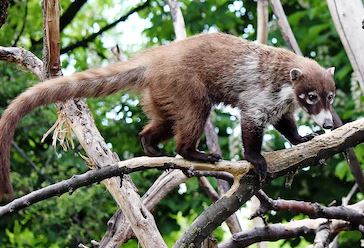
Listed as a threatened species in Texas, white-nosed coatis – also called coati-mundis – belong to the family Procyonidae, a group of small carnivores that includes raccoons and ringtails. They occur largely in woodlands and canyons found in Mexico and Central America but have ranged northward as far as southern Texas.
Raising a pet coatimundi (also known as Coatis) can be quite a challenge at the start especially if you’re going to do this for the first time. You need to know a lot of important things. You also need to consider different sets of factors while you’re doing this so that you can ascertain that your exotic pet won’t grow up having bad habits that may cause you some harm later on.
One of the most important things that you need to know about raising a pet coatimundi at home would be not overfeeding your baby during one feeding. You need to watch how much you feed your exotic pet because coatis usually continue feeding until they become really bloated. Overfeeding can lead to inhalation pneumonia; loss of body condition; and loose stools. When you finish feeding your pet coati and it’s still hungry, you have to wait for at least 45 minutes before you can offer the bottle again. At 5 weeks of age, your pet coati should start eating an average of one ounce per feeding. You should feed your pet four times daily. You can increase this frequency as your exotic pet gets older. Don’t forget to burp your pet coati after each feeding.
The next important thing that you need to know about raising your exotic pet would be the right time when to wean. This is usually up to the pet owner and can be based on your own circumstances. You have to know that the more frequently you bottle feed your baby coati, the less inclined it’s going to be on eating solid foods. At 5 to 6 weeks of age, you should start leaving some dry puppy food for your exotic pet. When you start feeding solid foods to your exotic pet, you can mix some apple juice with puppy food or monkey biscuits. Each coati is considered as individual with its own unique taste buds. Some of the favorite foods of coatis include pizza, luncheon meats, newtons, blueberry muffins, watermelon, eggs, and bananas.
Vaccination schedules are another thing that you should consider. These should be the same with puppies and kittens. First vaccinations and worming are given at 5 to 6 weeks of age. After which, this is then done every 3 weeks until coatis reach the age of 16 weeks. Annual boosters and worming are also highly advised. Aside from this, coatis should also receive a dog distemper-parvo shot or DHLP-P and the cat panleukopenia vaccine. You can have your pet coati wormed with any good cat wormer or dog wormer.
Next, never use too much over the counter flea prevention products because most of these products are toxic to exotic animals. If you have a pet coati that’s below 12 weeks of age, it would be best for you to spray Adams brand flea spray on a towel and wipe it on its skin. Don’t overdo this too much so you do not cause harm to the animal.
Lastly, if you have a male coati, it’s highly advised that you have it neutered. Males that are intended to be breeders on the other hand, should be mother raised or should be placed in the breeder pen at 4 to 6 months of age.
Under mounting pressure from the Food and Drug Administration (FDA), Bayer Corporation suspended the sale of its hugely profitable drug Trasylol in November 2007.
A blood clotting drug used during heart surgery to control bleeding, Trasylol was given to more than four and a half million people worldwide. About one and a half million Americans received Trasylol during its 14 year run on the US market.
Studies found that patients who received Trasylol during heart bypass, heart valve replacement and other cardiac surgery were more likely to die than patients who received other available blood clotting drugs. Deaths were due to heart failure, kidney failure, heart attacks and strokes the patients suffered after surgery.
In 2007, Bayer designed a major Canadian trial to show that Trasylol was better than other drugs in controlling bleeding. The trial was terminated, however, because of an increase in deaths among cardiac surgery patients using the drug. Patients receiving Trasylol had a 50 percent increased risk of dying compared with patients receiving other drugs.
What’s a few thousand deaths among friends?
60 Minutes reported in February 2008 that Bayer had known about Trasylol’s safety concerns for decades and about the abnormally high incidents of deaths associated with the drug since 2006. Yet Bayer continued aggressive marketing of the drug, raking in well over $300 million annually. The FDA permitted Trasylol to stay on the market, contributing to an estimated 1,000 deaths a month for the 22 months before its recall.
The 60 Minutes report went on to describe Bayer’s own internal study evaluating the risk of patient deaths from Trasylol. Medical records of nearly 70,000 patients were examined by a Harvard professor who was placed on the Bayer payroll. What the professor found was that patients given Trasylol had an elevated risk of acute renal failure.
Bayer concealed this study from the FDA during a safety review of Trasylol in 2006. The drug giant further charmed the FDA into allowing Trasylol to stay on the market. More than a year passed before the FDA got around to reviewing the adverse effects of Trasylol again. Finally, the FDA recalled the drug but imposed no fine or penalty on Bayer.
What does this have to do with fleas & ticks on dogs and cats?
Another way Bayer works wonders is with its insecticide Imidacloprid, the active ingredient in Advantage Flea & Tick treatment for dogs and cats. Laboratory test results on file with the U.S. Environmental Protection Agency show Imidicloprid to be neurotoxic to dogs and other laboratory animals, also causing a breakdown of coordination, labored breathing, reduced birth weight, increased birth defects, and lesions of the thyroid.
Of course, Bayer has remained silent as a stalactite about these adverse health effects on our precious pets. Could this be yet another 60 Minutes report in the making?
Sooner or later, responsible dog lovers and cat lovers need to ask themselves the question, Am I trusting the big drug companies too much with the safety of my best friends? Sooner or later you need to ask yourself whether toxic chemicals are really necessary when safe and natural flea & tick treatments are readily available.
What’s my advice? You can’t ask questions too soon, but you can ask them too late. Discover now why pet lovers everywhere are turning to TripleSure Natural Flea & Tick Spray For Dogs And Cats.