Summer blooms not only with colorful flowers but also with various parasites, and there is no doubt that as a pet parent, you take considerable steps to control these pests especially ticks. Ticks can be picked up easily by furry pals and are huge in number whether it’s urban area or rural area. These blood sucking creatures that belong to the spider group can cause a wide range of diseases, including Lyme disease, Rocky Mountain fever, which are highly dangerous for pet health as well as humans too.
Usually present on leaf litter, undergrowth and long grass within heathland, woodland, rough pasture as well as urban parks and gardens, ticks are picked up on hair, clothes when a dog or person brushes part them. Feeding on the blood of animals, they can pick up the infection and can pass on from one animal to another.
To avoid these blood-thirsty critters, follow the tick tips and protect your furry pal.
Round the WORLD Tick Tips
Buy a tick removal device such as a tick key from your vet or an online store, so you can easily remove any tick, which you may notice on your furry pal.
When taking your dog to a new area, always look for warning signs on lampposts that can indicate whether the area is full of ticks or not, and you can avoid taking your pooch there.
Do not try to take your dog through lush green areas, long grass or marshy places. These areas are usually highly infested with ticks.
To locate ticks, always check your dog’s neck, ears and legs after walks. Though the tick may not necessarily bite, it may take time to find a suitable site on the skin. Therefore, it is crucial to brush off pets and clothing whenever you and your furry pal return from a walk.
In case, if you find any lump, part the hair and look more closely, maybe using a magnifying glass. Once a tick has started to feed, its body will start filling with blood. Adult fleas are easy to be seen as they swell many times their original size, sometimes as large as a pea. However, mostly they are as small as a poppy seed, so you have to look closely.
If you find any tick, then immediately take tick key or any other tick removal device to remove it. Don’t forget to wear gloves while removing it. When a tick is removed within first 24-hours, there are less chances of getting an infection.
Do not crush or squeeze the tick, as this can result in breakage of head and body, releasing toxic saliva harming your pet.
Dispose of the tick by crushing it between tissue paper and flushing it down the toilet.
Along with this, you should also treat your pet with tick medications. These parasite treatments will kill ticks as well as protect your dog from harmful tick infestation.
o Fleas spend only 10% of their time on your animal
o An average fleas’ life span can be up to 2-3 years
o One female flea can lay up to 1 million eggs during its life
o Eggs can live unhatched in your carpet for a year until the right environment for hatching occurs
o Bark dust, wood piles and ivy are great places for fleas to survive the winter months
o The flea is the second oldest insect (the cockroach is the first) because of its excellent survival mechanisms
The Flea Life Cycle
Adult cat and dog fleas prefer to feed on pets rather than people. The pets are closer to the ground and have warmer body temperatures than humans. Second choice would be children — especially infants and toddlers. Female fleas will probe and bite and average of seven times in a “grouping” before locating a blood vessel in the skin. The saliva they leave with each bite can cause a localized allergic reaction (flea allergy dermatitis or FAD as we call it in the veterinary world.) After feeding on large amounts of blood, the female flea deposits her eggs and droppings (flea dirt) which consists mostly of undigested blood. Both the eggs (which are white and about the size of a grain of salt) and the droppings (which are black and appear like ground pepper, often in the shape of a comma) drop off the animal’s coat and spread all over the environment.
Home test to see if your pet has fleas
Lay out a white piece of butcher paper and groom your pet for a few minutes as they stand on the paper. Do you see any black, comma-looking things against the white paper? If so, put a drop of water on it. If it’s flea dirt, the water will turn pink.
Flea eggs remain in the environment for variable amounts of time and are not destroyed by extremes in temperature or by pesticides. When proper conditions exist, the eggs hatch and release tiny white larvae. These larvae are not able to get around and must rely on the undigested blood left in the droppings for their food source. Larvae are very susceptible to extremes in the environment, pesticides, and insect growth regulators.
Within several days the larvae spin a protective cocoon called a pupae around themselves. The pupae are very resistant to all but steam cleaning and can lie dormant for many months to years. The pupae is the primary stage that over-winters in the environment. When conditions are favorable (warm and moist), the pupae release young adult fleas and the cycle is complete.
The length of the flea life cycle can vary from a little as one month to as long as two or three years.
Flea Control Products
There are many products available to eliminate fleas. They differ in effectiveness, application, safety, convenience, odor of the product, and duration of effectiveness. Sounds pretty complicated, right? It is. It’s actually a chemical nightmare.
AN EFFECTIVE FLEA CONTROL PROGRAM MUST INCLUDE ALL ANIMALS IN THE HOUSEHOLD AND THE ENTIRE ENVIRONMENT IN WHICH THE ANIMALS LIVE (INCLUDING YOUR CAR.)
Many people only use one product at a time, which is NOT effective. You must treat the animal, the house, and the yard all at one time to get this challenge under control.
Control of fleas on the pet
You have your choice of powders, sprays, dips, spot-ons or oral growth regulators.
Flea Powder: Manufacturers of these products say flea powder is safe to use every 3-4 days on dogs and cats older than 8 weeks of age. The active ingredient, (pyrethrins being the safest and most natural ingredient) takes about 15 minutes to kill fleas when first applied. By the end of 5-7 days, if not reapplied, flea powder works only as a residual, taking up to 12 hours to kill the flea. There is no growth regulator in this product so it only kills the adults.
Note: Powder should be diluted to half strength with talcum powder when used on puppies and kittens.
Disadvantages of flea powder
Flea powder can make the coat feel rough and dirty. So, if your pet is already uncomfortable from the fleas and now you are alienating them by not giving them the affection you used to when their coats were cleaner and softer, this makes the problem worse. The animals do not enjoy flea powder and it may make asthma worse.
Flea Sprays
Sprays can vary somewhat. Most are alcohol-based and some are more organic than others. The alcohol is for quick kill of the adult and pre-adult stages. Some flea sprays contain an insect growth regulator that will kill flea eggs as well. Make sure you get one with this in it. Pets run when they see you come to them with that bottle after a few applications.
The only time I use flea spray is when I’m treating a cat for ear mites (I spray some on a Kleenex and wipe their head down after I clean their ears and put medication down both ear canals.) I also use it to spray my pant legs when I take walks in the woods during tick season.
So, could you use rubbing alcohol or vodka to kill the adults? Yes, but using rubbing alcohol can be toxic. Rubbing alcohol contains a bit of methanol, which can cause blindness when ingested. Cats groom themselves and will ingest this. If you want to use alcohol, stick with vodka or Everclear, but it’s really not very effective.
Aromatherapy
Herbal insecticides include pennyroyal (very toxic), clove, citronella, and eucalyptus oils (diluted of course.) These can be mixed in with shampoos or applied to a material flea collar. They can be very irritating when applied directly to the skin. They should not be put directly onto the coat either because when the animal grooms himself or herself they will ingest it. In general, pets hate this type of flea control and only submit to it in a learned helplessness type of situation.
Flea collars are only minimally effective in the control of fleas. Most collars contain dichlorvos, which is released as a vapor. They are sold under several trade names. Dichlorvos is toxic to animals and people and can cause severe reactions occasionally. Remember, flea and tick collars don’t work well for animals over 20 pounds.
Note: Collars are especially harmful to Persian cats. They may also cause localized reactions around the neck.
Ultrasonic collars
Ultrasonic collars are ineffective and may cause hearing loss in your pet. Ultrasonic collars are an expensive gimmick. Don’t fall for this.
Dips which kill fleas and mites for several days or weeks are highly toxic and should not be used for routine flea control. One study found that more than 3 dips per year led to an increased incidence of cancer. Wear gloves if you decide on this method of flea control (although I have no idea why you would.) Try to pick a non-organophosphate (OGP) type with a growth inhibitor in it.
Pour-on and Spot-on products containing organophosphates are also very toxic. Organophosphate spot-on kills the fleas only after it bites the pet and sucks its blood. These products are also dangerous where infants are concerned. Do not let a small child be exposed to the pet for at least 24 hours after these products are used. I have heard of instances where the parent found a dead infant the day after putting this on the family dog that slept with the child. They are applied once every two weeks. A good rule of thumb is “if a little is good, a lot is NOT necessarily better.” Use only the dose specified on the bottle. Make sure you know the weight of the animal before you dose them. Make note of the next paragraph.
Common side effects to flea products
Common side effects to flea products may include hypersalivation, vomiting, and diarrhea. Some animals appear to foam at the mouth, others stagger about. Their pupils dilate and they seem disoriented. The best treatment is to remove the product from the animal’s skin or body. Bathe your pet immediately–with a mild shampoo NOT containing flea control. Some animals may need to be treated by a veterinarian with atropine or steroids to help the animal deal with the toxicity and in some instances to save their lives. If you have any questions, do not hesitate to call your vet.
One product on the market seems to be working quite well and is minimally toxic. It is called Advantage. Advantage is a spot-on with a growth inhibitor, which works for 3-4 weeks. It permeates the fatty layer of the skin. It should be applied after the bath because bathing leeches the product from the skin. Advantix is a formula that is used for those who are in a tick area. It is also fairly safe.
For dogs that swim regularly, this product may not work as well as others such as Program. If Advantage is not working for you, you are most likely not following a total flea control program of treating all animals in your house, premise spraying the house, the car and treating the yard as well.
Occasionally I have seen Advantage react locally with the skin causing the hair in that area to fall out, but this is rare.
Program is an oral product that contains growth inhibitor. It is given once a month and literally sterilizes the adult fleas so they cannot produce any eggs. It is very safe for both the animal and owners. The animals don’t mind the taste in most cases and it is very effective when used with environmental control. Some forms of Program also include a heartworm preventative and monthly roundwormer (pyrantel pamoate). This product is especially recommended for flea problems of a larger magnitude and for long term maintenance. It’s not a good product for the flea allergic pet, however because the flea still needs to bite the pet to ingest the growth inhibitor.
Frontline products
I am often asked about Frontline products. I will have to say that I have never muscle-tested this product to be safe for any pet. It sure is popular and sells like crazy (I don’t carry it.) I don’t know why, but Advantage and Program seem to be the safest products with the fewest chance for side effects.
Flea Shampoos
Flea Shampoos provide no protection once they are rinsed off. They can provide temporary relief (a few hours with severe infestation of the environment) and will kill the fleas on the animal at the time of the bath. They are good in getting rid of the flea dirt on the skin, but they also dry the skin out and are not good for dogs with dry/flaky or oily/greasy skin. It’s better to choose the correct medicated shampoo for your pet in these cases.
Apply flea spray, powder, or Advantage to the pet after the bath for longer lasting results. Any animal having skin disease along with the flea problem should see your veterinarian for proper treatment and recommendations regarding diet, shampoo and treatments.
I’m sorry to say that B-Vitamins, Brewer’s Yeast, Garlic, Cedar Chips and Herbal Flea Collars will not kill fleas. They do, however, make the skin smell bad to the flea and will deter them. Scientific studies show a decrease of only 20% in the flea numbers with the use of these products.
Note: Cedar chips and shavings can be harmful to your pet’s skin. The slivers off the chips can embed into the skin and cause tumors (that goes for rats too!). The essential oil of the wood is also very toxic and has been known to cause cancer.
Avon Skin-So-Soft
Avon Skin-So-Soft is used by itself as a flea deterrent and is in Duo-Cide products. To use this product, add 2 tablespoons Skin-So-Soft per pint water in a pint spray bottle. Shake well just before using each time–it is an oil/water interface. Skin-So-Soft may make the coat oily and you may have to wash the pet more often as the dust will stick to this oil more readily. If your pet has allergies, this would not be a good choice. The goal is to reduce allergen exposure on the coat for allergic pets. This product would help the pollens to adhere to your pet causing more problems.
Flea combs are highly recommended for animals that cannot tolerate flea products. The challenge is to get the owners to use the comb as often as necessary to help the animal–every day. Grooming can be biweekly after you comb off no more fleas for several days in a row. Continue to use the flea comb daily for those flea-allergic pets. Fleas need to be crushed with a thumbnail as they have very hard exoskeletons.
Some fleas combs are better than others. Try to purchase one that will rake off the adult fleas, eggs, and flea dirt all at once. These combs are also excellent in the prevention of hairballs in cats (and will comb out lice in a child’s hair very effectively). Fleas combs won’t comb through the longer coats very easily–the tines bend and break. I like the kind imported from England. They have a great handle you can palm and metal tines that can really take a beating (or grooming.) I also use my flea comb to comb out the winter coats on my pets. They cost about $7.00.
Treating the Pet’s Environment:
In general, the products used in the environment can be more toxic and last longer than those which are applied to the animal. Never use these products directly on your pet or children unless the bottle states it is safe to do so (even then, I would question this.)
Where young children and infants are concerned, more importance is placed on safety than effectiveness. This is why it is important for you to be involved in the choices of products for your home and pets.
Premise control products
Premise control products kill only the susceptible stages of the fleas at the point in time they are used. They are fairly safe and can be used as the main environmental treatment in homes that have birds and fishes as pets. The frequency of fogging and spraying depends upon the temperature and humidity, degree of flea infestation, the traffic of pets in and out, the effectiveness of the products used, and the amount of household clutter in which fleas can hide.
Foggers
Foggers are designed to cover large enclosed areas and are set off while all occupants (including pets) are away. They are most effective in empty spaces and in crawl spaces. In homes with furniture or items covering the floor they are not very effective. Foggers can take care of up to 80% of the problem. Make sure you get one with a growth inhibitor in it.
When using foggers, remove all living things from the premises. Cover your fish tanks and remove all the birds. Read labels prior to using any foggers or premise sprays. Because the insect growth regulator Methoprene is also removed with vacuuming, vacuum or steam clean before using them and wait at least 4 days after fogging to vacuum. Foggers are basically gone after 10-15 vacuumings.
Put your dollars into growth inhibitor products for most effective and economical results.
Premise Sprays
Premise Sprays are designed for spot treatment or for difficult to reach areas and for areas which are not enclosed such as a back porch or doghouse. Use premise sprays for the baseboards, under the furniture, and between the couch cushions and around the edges of the water bed mattress.
These products last 2-3 months, are not as easily vacuumed up (they last for 20-30 vacuumings) and are very good for high traffic areas and for continuous protection. These products are broken down and become ineffective by the sun’s rays. Use them for touch up in well-traveled pathways in the house where you may vacuum more often. Don’t forget to treat your car if you pets travel with you (even just once to the vet.) This product is effective and a good use for your dollars.
Yard and kennel sprays are for outdoor use and should be used in accordance with manufacturer recommendations. Most fleas live within a 30-foot radius of the building — where most pets spend their time. These sprays can be purchased at your veterinarian’s office, pet shops, on-line, or at the local garden store.
Nematodes that eat flea larvae
A few years ago I carried a natural product of nematodes to sprinkle on your lawn that would kill the flea larvae. That would be a great product if it were effective. The downfalls to this product were that it had to be kept wet, the expiration dates are short, it is expensive, and one can does not go far. If anyone of you out there has found a good product like this could be, let me know!
Malathion and Sevin
These sprays used most frequently for the yard, but get inactivated by sunshine and they will not last over 3-7 days. Spray them after the sun has gone down and when you know it won’t be raining for a day or two.
Housekeeping can be an extremely effective flea control measure. Vacuuming will remove flea eggs, pupae and the flea droppings used by the larvae for food. Vacuum up some flea powder or add a piece of flea collar to each new bag or burn the vacuum sweepings to prevent fleas from completing their life cycle in the compost heap or trash bag. Vacuuming EVERY DAY is essential if you don’t want to use chemicals. Also, getting rid of carpet in your house helps a lot. I would also recommend an occasional shampoo of the carpets (not dry-chemical cleaning) as it will suffocate the cocoons.
A note about worms: When fleas (or mice) are ingested by your pet the tapeworm (cestode) is allowed to finish its life cycle. If you see rice-sized segments sticking to the hairs around the rectum of your pet or see the segments or “ribbon or noodle-like” worms in the stool or on the animals bedding you should contact your veterinarian for a drug to treat them. Over-the-counter worm preparations only treat nematodes (roundworms) and are not effective against tapeworms. Worming may be necessary as often as every three weeks (the life cycle of the tapeworm) depending on the severity of the flea problem.
When in doubt (especially for large dogs, which can be very expensive to worm,) bring in a fresh stool sample for a floatation. The floatation may not show eggs even though your pet has worms.
My recommendation
My recommendation is to worm your pets if you are seeing fleas with a good tapewormer (Cestex is wonderful) and worm twice a year with pyrantel pamoate (also called Nemex or Strongid-T) roundwormer. Piperzine is useless these days for roundworming and no longer works at all in cats. The grocery store doses are ineffective.
If you have wormers at home and would like to try to use them up first, call your vet. We need to know the chemical name (scientific name) to be able to tell you if you have the proper medication.
NEVER give a store bought wormer to a pet who is sick unless your vet is consulted first. You may cause some severe problems–especially with triple wormers. I once had a relative give her pregnant dog a triple wormer. The dog strained so much that her uterus burst and she died.
Diatomaceous Earth
Not all diatomaceous earth (DE) is alike. Stay away from filtration types. All DE that is used for filtration purposes (pools, spas, etc) has undergone chemical and heat treatment. The heat treatment greatly increases the percentage of crystalline silica, which poses a serious inhalation risk. DE has high crystalline silica content and some DE has high levels of arsenic in it. Our local organic people recommend Perma-Guard (www.perma-guard.com). Another brand to use that is safe is Biconet. Only natural untreated DE should be used for insect control.
How does DE work? The dust clogs their breathing apparatus so they suffocate. Unfortunately it may also make asthma symptoms worsen.
Mopping with soap and mild bleach water is quite effective for flea control in those houses with no carpets. Many of my clients with flea allergic animals and inhalant allergy children eventually change over to hardwood floors and linoleum.
Flea attractant lights. What a racket. Don’t waste your money on this gimmick. White dishes filled with water and Joy dish soap: I suspect if you are attracting fleas to this kind of contraption that you have a severe infestation and should think about doing something a bit more effective.
Well, I hope this helps your flea problem. Good luck! You’ll need it.
Q. What is the best natural dewormer for dogs? ANSWER
So you found out your dog has worms! Don’t worry, you are not alone. Finding that your dog has worms is a common thing for dog owners.
FIRST: Confirm The Worm
Intestinal worms and parasites are different than internal heartworms, and are treated differently.
Most worms that infect dogs include roundworms, tapeworms, hookworms, and whipworms live in the intestines, so that’s the first place for your vet to look. Usually, you will have to take a stool sample to your vet, and they will examine it under a microscope to see what type of worms your dog has. For heartworms, a blood test is usually required to detect heartworms. Some dogs may have a small amount of worms that pose no threat to the dog, since some dogs have different immune levels, and for some dogs, just the slightest infestation could kill them.
How To Deworm Your Dog Or Puppy 4
With the different types of dog worms found, it is important to make sure you put your puppy or dog on a deworming program at the start of 2 weeks old. Some worms you can not see with the naked eye, and it is important for the puppy or dog’s health to be protected against these parasites that infect their bodies sometimes.
Here are some other things you can do to help prevent worms. Try not to let your puppy or dog play with dead animals or rodents. This is where most tapeworms come from. Puppies are prone to tasting their feces matter, so make sure you discourage that, and clean up waste right away. This is the most common way for puppies and dogs to get worms.
How To Deworm Your Dog Or Puppy 5
Having your dog on a flea prevention program is great, since fleas help spread tapeworms in dogs. The dog park is sometimes not the best place for your dog to hang out. Sure, he or she would love it, but some other dog owners do not have their dogs under control, and this is an easy place for other dogs to catch stuff, from digging in the dirt to jumping on and licking other dogs.
Too many worms for any dog would be bad, and totally affect their health and well being. Your dog would have diarrhea, and their shiny coat of hair would become dull looking. Most of the nutrients your dog needs from food would be going to the worms, and your dog would lose energy and lose weight. The red blood cells would become destroyed, and the dog would become anemic.
You can find many different types of natural dewormer for dogs or medicated dog dewormers from pet stores to online pet stores and some of the major retailers of pet products. Dewormers can come in the form of pills, soft chews, liquid or injection. Make sure you understand how to do it. Each company and type of dewormer could have different directions. Most vets recommend deworming your puppy at 2, 4, 6, 8 and 12 weeks old. Then follow the directions, as some medicines will be monthly, or quarterly, and even semi annually. So ask your vet which dewormer is best for you, or follow the directions closely on the dewormer product your purchase.
ANSWER: The best natural dewormer for dogs is the one that works for your dog.
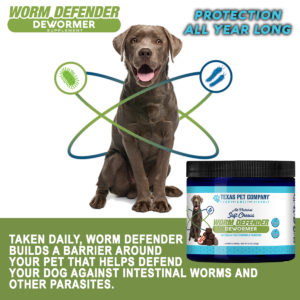
With a variety of options on the market we know not all size fits one. Texas Pet Company brings a easy solution for those seeking to deworm your dog using natural ingredients like Pumpkin Seeds, Diatomaceous Earth and Apple Cider Vinegar.
They provide an easy and safer alternative to worm pillsfor dogs in the form of soft chews.
Is breeding Golden Retrievers the right choice for you? It is much more complicated than most people think. Moreover, it is much more expensive than most people think. If you suppose that breeders earn lots of money by selling puppies then you’ll be surprised to learn the truth – they barely “break even”. If you want to make some quick money by selling puppies – better find another opportunity. So what’s so difficult and expensive about breeding Golden Retrievers?
Costs of Breeding Golden Retrievers: Something to Consider Before You Start Breeding 14
Time and Effort
A reputable breeder is a person whose goal is to preserve or develop some qualities of a breed according to breed standards. It takes an enormous amount of time and effort studying the breed, reading books, studying pedigrees, visit shows, and communicate with other breeders. If you are really serious about breeding Golden Retrievers be ready to dedicate lots of time to this business.
The Foundation Bitch
To start breeding the right way you need to have a dog of proper quality. It might take up to one year to research pedigrees, find a proper breeder and adopt a puppy. Expect to spend from $800 to $1500 on your foundation bitch. It’s not the right moment to try to save some money.
Raising Your Dog
You can not start breeding golden retrievers until your dog is at least 2 years old. Here costs will include everything related to puppy rising like vaccinations, food, toys, training, etc. You’ll also want her to participate in shows and trails to see how she stands up to breed standards. Here your costs will be show entry fees, grooming supplies, maybe the cost of a professional handler and of course travel expenses.
Medical Screening
You need to make sure your golden retriever is healthy and won’t pass any genetic diseases to her offspring. Most of the medical tests can not be conducted until a dog is 2 years old. You need to check elbows and hips for signs of dysplasia and obtain OFA certificates. Within 12 months prior to breeding golden retrievers, you must have your dog’s eyes checked by a broad-certified veterinary ophthalmologist for signs of eye-diseases. A heart clearance test should be done to confirm the dog possesses no hereditary heart disorders. The general cost of all procedures should be about $320. Finally, the general health of the dog should be examined.
Finding a Stud Dog
If your dog proved to be worth golden retriever breeding after shows and medical tests it’s time to find a stud dog for your bitch. You’ll need money for travel expenses to visit shows and trails to view dogs and meet breeders, you’ll need to make long-distance calls and spend many hours researching pedigrees.
Cost of Breeding
If you are going for golden retrievers breeding in a natural way you’ll have to cover shipment of your bitch to the stud dog’s kennel plus extra board. If you’ll choose Artificial Insemination you’ll need to pay for the collection, preparation and shipment of semen. Don’t forget about the stud fee paid to the owner of the dog which normally is between $700 and $900.
Financial Breakdown of Golden Retriever Breeding Costs
Veterinary Costs:
Health screenings: $200-$500 per dog
Vaccinations: $50-$100 per puppy
Deworming: $10-$20 per puppy
Emergency care: $500-$1,500
Breeding Fees:
Stud services: $500-$1,500
Artificial insemination: $200-$600
Care Supplies:
Food: $100-$300 per month
Bedding/whelping supplies: $100-$200
Puppy supplies: $20-$50 per puppy
Registration and Documentation:
AKC registration: $25-$50 per puppy
Pedigree certification: $50-$100 per puppy
Marketing and Finding Homes:
Advertising: $50-$200
Vet check/health guarantee: $75-$150 per puppy
The Birth
You have to be ready to use vet help in case it is needed. And a lot of things can go wrong. The price of a C-section may vary from $300 to $1000 depending on the case.
Rising Puppies to 8 Weeks
Vet bills, food, vaccinations, worming, registration of puppies with Kennel Club, microchipping or tattooing and the amount of time required to socialize your puppies, take care of them and find them a new home.
Costs of Breeding Golden Retrievers: Something to Consider Before You Start Breeding 15
What if you own a stud dog?
It doesn’t make the whole procedure much easier. In fact, the stud dog owner shares the responsibility and also needs to check the dog’s health, and grooming and be willing to take care of the litter in case bitch owner can not go on for some reason.
As you see breeding Golden Retrievers is far from being cheap and easy. Whether it’s worth it or not is up to you to decide. Golden retriever stud fee is around $500 to $1,500.
Heartworm is one of the most common of the parasites your dog can contract, they can become very ill and treatment is expensive. Prevention is simple and can be done inexpensively. Heartworm is passed from the bites of mosquitoes and the larvae gets into the heart. As they mature the adults block the valves. Generic heartgard is an option to consider when seeking medication for your dog.
Heartworm pills all serve the same purpose, to kill larvae and prevent them from maturing into adults in your dog’s body. They come in a chewable form and are given monthly to prevent infestation. They are also available in a hard tablet that can be mixed in with food or in a liquid form.
The benefit of heartworm prevention is that it will work well and should be started when your puppy is as young as 12 weeks old. Preventing heartworm is much easier than curing it and it is more common in warmer climates that have a long mosquito season. There are also medications that can keep mosquitoes away from your pet.
Before starting treatment discuss options with your vet, your dog should be tested first to make sure that they are not already infected. Killing off large numbers of adult worms can be deadly to your dog. Some breeds are also sensitive to the active ingredient in the pills and could have serious side effects.
Considerations in heartworm medications should include that they are vet recommended or approved, the size should be approved, find out if you need a medication that also controls fleas and ticks, see if it is safe and effective, find out what the ingredients are, determine the cost, ask if there is a guarantee and what is the dosage should be. The ideal medication is easy to administer, is safe and effective and available at a reasonable cost. It should be the right dosage for the size of your pet and if applicable provide protection for the prevention of fleas and ticks.
Some of the top products on the market that prevent heartworm and protection against roundworms include Interceptor, Heartgard and Heartgard Plus, Pro Heart6 and Filarabits. For the prevention of fleas and heartworm there is a medication called Sentinel. To control fleas, ticks and heartworm you can ask for Revolution.
Ivermectin is one of the generic heartworm pills, it’s active ingredients are found in Heartgard, Valuheart, Iverhart and Trihart. It is very inexpensive. Ivermectin works against heartworms and mites and some lice. It is a broad spectrum anti-parasitic that works by changing the nervous systems and muscle function of the heartworms. It is available without a prescription.
Another great medication for your dog is K9 Advantix. It controls fleas, ticks and mosquitoes in dogs within 12 hours. It is a very effective medication to keep your dog safe from ticks and mosquitoes. It has long term effects and works even after giving your dog a bath. Another medication for you pet is Petcam. It is used to control pain in dogs, Meloxicam is the main ingredient. Generic heartgard and other pet medications can be purchased online but a vet should oversee any administration of medications for your pet.
The first thing you should know is that blood in dogs urine and stool can be attributed to many different causes with some causes being serious and life-threatening while others are illnesses that are treatable.
Parasites or worms are something common in dogs and puppies. Most puppies have roundworms and need worming at about five weeks of age. They can also have hookworms and other types of parasites. Hookworms can also be present in adult dogs causing blood in stool dog. The hookworm attaches itself to the lining of the intestines and sucks out the blood for the nourishment it needs to live resulting in dog with bloody stools.
Injury from a fight can cause internal bleeding. Possibly your dog got out of the yard and met up with another dog resulting in a fight. Your dog might have sustained internal injuries causing him to bleed resulting in dog peeing and pooping blood.
Prostate problems in older male dogs result in bloody stool in dogs. An enlarged prostate can be caused either by a prostate gland infection or prostate cancer.
Additional causes of blood in dogs urine and stool:
1. A blood disorder or a dog with a slow clotting type of blood similar to a hemophiliac but not as severe.
2. Bladder or kidney stones.
3. Your dog might have gotten into the poison the exterminator put down for rodents. The type of poison for rats and mice causes internal bleeding and death.
4. An infection of the uterus is common in females after having a litter.
5. A canine urinary tract infection.
When to See a Vet?
Dog peeing and pooping blood should not be taken lightly, so make an appointment to have your dog examined by a vet. It has been documented that once a dog has had an infection or urinary problem the odds of it happening again are much greater.
Once the vet examines your dog and confirms the diagnosis that it is a urinary tract infection, you must discuss the kind of treatment to be administered. You can choose the conventional antibiotic treatment that carries adverse side effects that can be more dangerous than the illness or a natural remedy that is safe and effective. There are also over-the-counter supplements that can aid in post-UTI treatments so possible reoccurrence can be prevented.
Recommended Actions
Symptom or Cause
Recommended Action
Parasites (Roundworms, Hookworms)
If your dog’s got the “wormy” business going on, don’t wait! Call up your vet and get them on a deworming plan. Better safe than sorry!
Prostate Issues (Older Male Dogs)
If your older guy’s having issues, it’s time for a prostate check-up. No need to wait till things get worse—make that vet appointment!
Blood Disorders
Blood in your dog’s stool or urine? That could be something more serious. Get them checked out so you’re not guessing or waiting for things to spiral.
Bladder or Kidney Stones
Stones don’t just go away! Get your dog to the vet for an X-ray or ultrasound. Surgery might be in the cards, but better to know now than later.
Poison Ingestion
If you suspect your dog ate something toxic—don’t waste any time! Get to the vet immediately. Poison can turn deadly fast, so don’t wait for symptoms to get worse.
Uterine Infection (Post-Litter)
If your female dog’s been through a litter recently and seems off, don’t ignore it. Get her checked out pronto! A uterine infection can get ugly if left untreated.
Urinary Tract Infection (UTI)
You don’t want to wait around with a UTI—it’s painful and can get worse fast. Call the vet, get the antibiotics, and help your dog feel better, faster.
Injury or Trauma
If your dog’s had a rough encounter (or accident), don’t play it cool. Get them to the vet ASAP. You can’t always see internal damage right away.
Recommended Actions
Summary
Why is my dog peeing and pooping blood? There are many causes of blood in dogs urine and stool, some of which are serious and life-threatening, while others are treatable. Parasites, injury, prostate problems, blood disorders, bladder or kidney stones, poison, uterine infection, and urinary tract infection are some of the causes. If you notice dog pooping and peeing blood, it is important to take them to the vet to get a diagnosis and treatment.
Here are some additional details about each of the causes:
Parasites: Roundworms, hookworms, and other parasites can cause blood in stool dog.
Injury: Internal bleeding from a fight or other injury can cause dog blood in urine and stool.
Prostate problems: An enlarged prostate can cause blood in the dog’s urine or stool.
Blood disorders: A blood disorder or a slow clotting type of blood can cause blood in dogs urine and stool.
Bladder or kidney stones: Bladder or kidney stones can cause blood in a dog’s urine.
Poison: Eating poison can cause blood in the dog’s urine or stool.
Uterine infection: A uterine infection can cause dog pooping and peeing blood after having a litter.
Urinary tract infection: A urinary tract infection is the most common cause of dog peeing and pooping blood.
If you notice dog blood in urine and stool, it is important to take them to the vet to get a diagnosis and treatment. Early treatment is important to prevent serious health problems.