After giving a dewormer treatment to your dog, they are worm free, but your cat needs deworming too. If there is still a part of the treatment left you can be tempted to just give it to your cat. You may find that the ingredients of dog and cat wormer treatments are mostly the same. Active ingredients like praziquantel are currently available under many different brand names. They can be found in both dog deworming and cat deworming treatments.
So, can you use dog dewormer on cats? The short answer is NO.
Can I Use Dog Dewormer on Cats?
Just because the active ingredient is the same does not mean that it is a good idea to give your cat your dog’s deworming treatment or vice versa. You can use cat worming treatment as a dog dewormer but not dog worming for cats. Not a good idea. The difference is in the amount of each ingredient used. The dosing amount also depends on the size and weight of the cat or dog.
There are a wide array of preventative treatments available for worms for dogs and cats. But while dogs can be treated with the aid of an injection once they are infected, cats cannot be treated the same way if they get worms.
There are certain cases, where the treatment that is effective on dogs can be poisonous for cats. So, it is always the better option to let your veterinarian suggest worming treatments for your dog and cat rather than treating them yourself.
Can You Use Dog Dewormer On Cats? (NO! But Why?) 10
Worming treatments for kitties are available online or at your vet, but remember heartworm treatment is a different ball game altogether. Remember, prevention is better than cure. The treatment not only is very tedious but also quite expensive.
It is also very important to understand that there are different intestinal worms that can affect your dog and cat.
So, never give one treatment that is specifically for treating a particular worm for another type of worm. For example; if your kitty has roundworms and your dog has tapeworms, never give the treatment that works to eradicate roundworms to treat tapeworms. Hence, before getting a deworming treatment, consult with your veterinarian who would determine the type of worm that has affected your pet, and then provide appropriate treatment and advice on dosage amounts.
The best possible way to counter the worm problem in dogs and cats is by taking preventative measures to keep them from getting any type of worm in the first place. Remember, kittens and puppies can be born with worms. They get it from their mothers when they nurse. That is the reason routine veterinary puppy and kitten care includes worm treatment.
After a year, ask your veterinarian to test your dog or cat’s stool to ensure that there is no presence of worms or parasites. Also ensure that they do not eat birds, mice or other animals that could be carrying worms. Also, get rid of fleas because that is the first big step to preventing worms in dogs and cats.
Are Worms Dangerous to Cats?
There are different types of worms that can infect your cat. Some cats may not show signs. But most of them will become sick. However, some species are life-threatening to cats. It can make your cat sick but it all depends on the severity of the worms.
Intestinal worms are most dangerous to kittens. Why? This is because kittens are young and they can cause developmental issues. With that, your cat can also fall into other diseases like anemia, and intestinal obstructions. It all depends on the type of worms they have. Some worms threaten cats of all ages. The most prominent one is heartworms. They can cause damage to their heart and lungs.
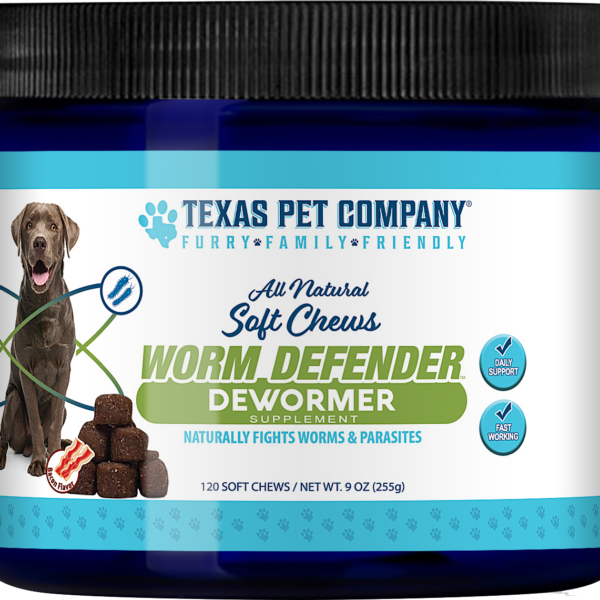
Natural and effective dog dewormer without Rx. Treat & control roundworms, hookworms or tapeworms in your dog with these bacon-flavored treats for dogs. Keep your dog healthy and worm-free with Worm Defender for dogs.
Natural and effective dog dewormer without Rx. Treat & control roundworms, hookworms or tapeworms in your dog with these bacon-flavored treats for dogs. Keep your dog healthy and worm-free with Worm Defender for dogs.
Dogs use body language, vocalizations, touch, scent, food, play, training, grooming, eye contact, and avoidance to communicate with humans. Understanding these different forms of communication can help you to build a stronger relationship with your dog and to create a more harmonious home environment. It is important to remember that dogs are individuals, and their communication styles may vary. Be patient and observant, and you will learn to understand your dog’s unique way of communicating. See ways to a calm dog.
How do dogs communicate with humans?
It is important to learn to recognize the different ways that dogs communicate so that you can understand what they are trying to say. This will help you to build a stronger relationship with your dog and to create a more harmonious home environment.
Body language
Dogs use a variety of body language cues to communicate their emotions and intentions, such as:
Tail position and movement
Ear position
Eye contact
Facial expressions
Body posture
Touching
Top 10 Ways Dogs Communicate With You 29
Vocalizations
Dogs make a variety of sounds to communicate, such as:
Barking
Whining
Growling
Yelping
Howling
Top 10 Ways Dogs Communicate With You 30
Touch
Dogs use touch to communicate affection, submission, and dominance. They may lick, paw, or bump their heads against you.
Top 10 Ways Dogs Communicate With You 31
Scent
Dogs have a very strong sense of smell, and they use it to communicate with each other and with humans. They may mark their territory with urine or feces, or they may rub their bodies against you to leave their scent.
Top 10 Ways Dogs Communicate With You 32
Food
Dogs are motivated by food, and they may use it to communicate with you. They may beg for food, or they may bring you a toy or object in exchange for a treat.
Top 10 Ways Dogs Communicate With You 33
Play
Play is a way for dogs to socialize, learn, and communicate. They may chase each other, wrestle, or tug-of-war.
Top 10 Ways Dogs Communicate With You 34
Training
Dogs can be trained to respond to a variety of commands, such as sit, stay, come, and down. This is a form of communication that allows you to control your dog’s behavior.
Top 10 Ways Dogs Communicate With You 35
Grooming
Dogs groom each other as a way of bonding and showing affection. They may lick, nibble, or rub against you.
Top 10 Ways Dogs Communicate With You 36
Eye contact
Dogs make eye contact with each other and with humans as a way of communicating. Direct eye contact can be a sign of aggression, but it can also be a sign of submission or trust.
Top 10 Ways Dogs Communicate With You 37
Avoidance
Dogs may avoid eye contact, touch, or other forms of communication as a way of showing fear, submission, or aggression.
Your Ultimate Guide to a Loyal and Powerful Companion
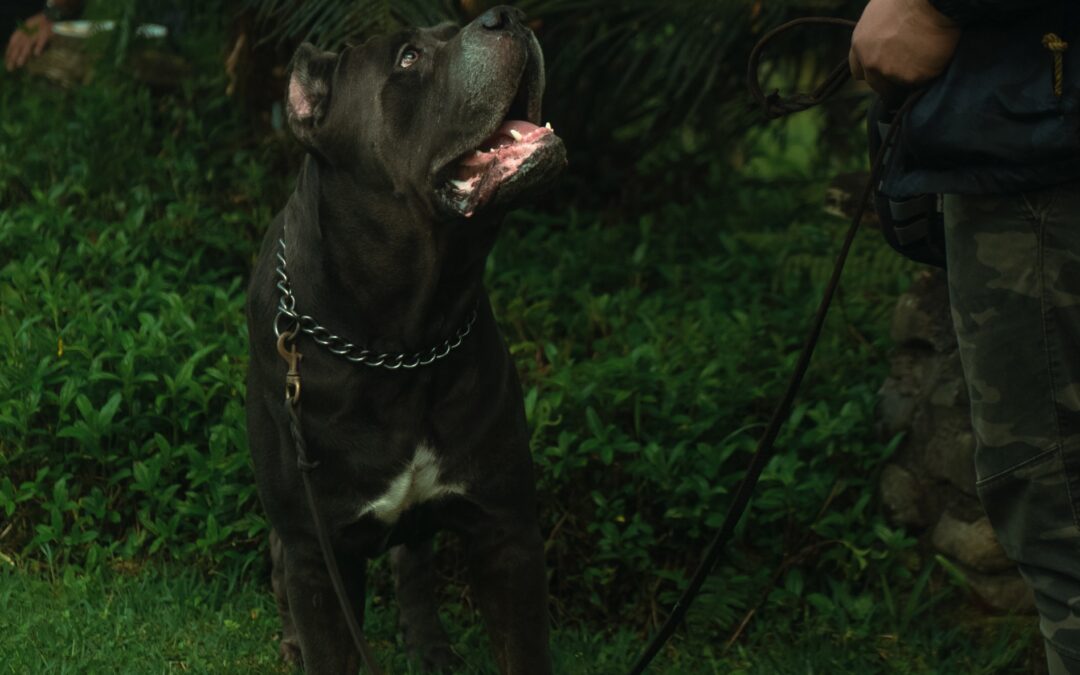
If you are looking for a loyal and protective companion, you may want to consider a Cane Corso, pronounced “KAH-Nay KOR-So”. These powerful Italian mastiffs are known for their impressive size and strength, as well as their calm and affectionate nature. Its name is derived from the Italian word for dog, cane, and the Latin term cohors, meaning “protector” or “bodyguard.”
Cane Corsos have a rich history, dating back to ancient Rome where they were used as guard dogs and hunters. The Cane Corso belongs to the subcategory of working breeds called mollosus dogs, or mollosers, named for the Molossi, an ancient Greek people thought to have bred giant, big-boned guardian dogs of Mastiff type. Today, they are popular pets and can be trained for a variety of activities, including obedience, agility, and tracking.
One of the defining characteristics of the Cane Corso is their imposing size. These dogs can weigh 80-120 pounds and stand 23-28″ tall at the shoulder. Because of their large size, the are sometimes called King Corso. Despite their size, however, they are known for their gentle and affectionate nature towards their families. These dogs can live from 10-12 years on average. Their ears are sometimes cropped, but it is not a required standard, and the tail is usually docked.
Cane Corso can come in a number of colors including Black, Gray, Fawn, Black Brindle, Gray Brindle, Red, and Chestnut Brindle. They have a short, coarse double coat. The length of the undercoat depends on where the dog lives. In colder climates, they will have thicker and longer undercoats than dogs in warm or hot climates. Breeds with double coats will shed throughout the year, but will shed heavily in the spring.
AKC Official Breed Standard
Cane Corso Standard: The ideal against which dogs are judged at shows, originally laid down by a parent breed club and accepted officially by national or international bodies. READ HERE
Basic grooming like brushing, bathing and nail trimming are typical for this breed. Typically, adult Cane Corso will eat 4-5 cups of food per day, this will vary based on weight.
Cane Corsos, plural Cani Corsi, are also highly intelligent and trainable, making them excellent working dogs. They are known for their loyalty and protective instincts, which makes them great watchdogs. Exercise and training are most important to a cane corso, daily activity and exercise will help keep them physically and mentally fit. Without exercise, they might find thier own unwanted activities like digging holes or chewing your household items. Having a large space, yard or area to live and play is ideal.
If you are considering adding a Cane Corso to your family with children, it is important to note that they require proper training and socialization. These dogs are naturally dominant, so they need a firm and consistent hand in training starting at an early age. They make great family dogs when trained properly. This dog will not do well in a home with anyone who is afraid of or dislikes dogs or is unable to handle a large dog.
Cane Corso Dogs 101: Your Joy With Majestic Cane Corso 56
Cani Corsi bred by standards are less likely to inherit troubling health conditions. However, some hereditary health problems can occur in the breed. They can be prone to hip dysplasia, eye conditions such as entropion, ectropion, and cherry eye, mange, and gastric dilatation-volvulus or bloating.
Overall, the Cane Corso is a wonderful breed that is both loyal and protective. If you are considering adding one to your family, be sure to do your research and find a reputable breeder or rescue organization. With proper training and care, your Cane Corso can be a loving and faithful companion for years to come.
Cane Corso Dogs 101: Your Joy With Majestic Cane Corso 57
Places To Adopt Or Find Cane Corso For Sale:
If you think the cane corso could be right for you, consider searching for a cane corso rescue group to adopt cane corso puppies or adults. Expect to pay on average of $1,500+ for cane corso puppies, and even more for pedigreed cane corso puppies.
Cane Corso Association of America
Search In Your Area
Big Dogs Huge Paws Rescue
Cane Corso Rescue
Must Love Corsos Rescue
Find A Breeder
Breed Bans
Cane Corso and other breeds may be banned in some cities around the country and could be subject to breed-specific legislation that is active in several hundred cities across the U.S. For example, areas of Colorado have a ban on Cane Corsos. Please check your city and housing guidelines before adopting.
Cane Corso Dogs 101: Your Joy With Majestic Cane Corso 58
Top 10 Gift Ideas For People Who Have Lost Their Dog
Why get a sympathy gift for the loss of a dog? Losing a dog can be an incredibly painful experience. Dogs are often referred to as man’s best friend, and for good reason. They provide unconditional love and companionship and are often seen as a member of the family. Losing a dog can leave a hole in one’s heart and can be a difficult process to overcome.
For many people, dogs are more than just pets; they are a part of the family. They offer companionship, loyalty, and a sense of security. Dogs can be there to listen when we need someone to talk to, and they can provide comfort during difficult times. Losing a dog means losing all of these things and can leave a person feeling lonely and empty.
Losing a beloved pet must be extremely painful, but our pet loss wind chimes can bring comfort and healing to pet owners. The pet paw and text engraved on the pendant are as worthy of a deep memory as the beautiful imprints pets bring to their owners. “Listen to the wind and know I am near” is the best commemorative phrase for cherished pets.
The loss of a dog can be particularly difficult because of the unique bond that exists between dogs and their owners. Dogs have a way of understanding our emotions and can offer comfort in ways that humans sometimes cannot. They are always there to lend a listening ear and a comforting paw. Losing this kind of companionship can be a devastating blow.
In addition to the emotional pain of losing a dog, there is also often a practical side to the loss. Dogs require a great deal of care, attention, and resources. When a dog is lost, it can create a void in the daily routine of its owner. There are no longer walks to be taken, meals to be prepared, or cuddles to be had. The loss of a dog can lead to feelings of aimlessness and uncertainty as to what to do with one’s time.
Show your support and love for a pet lover friend by giving or sending them a memorial gift candle, It is a great gift idea for any dog mom or dad who just lost an important part of their family. It will provide comfort to anyone who are going through tough times as they mourn the death of their beloved pet. Don’t just send sympathy flowers which will last only few days, when you can send this lifetime use beautiful home decor.
Grief is a natural part of the process of losing a pet. It can be a difficult and confusing time for those who are experiencing it. People who have lost a dog may feel a range of emotions including sadness, anger, and guilt. They may feel like they could have done more to prevent their dog from being lost, or that they didn’t do enough to cherish their time together while their dog was still alive. These feelings are all normal and can be expected during the grieving process.
One of the most difficult aspects of losing a dog is the feeling of isolation that can come with it. Friends and family members may not fully understand the depth of the loss, and it can be challenging to find someone to talk to who can offer the support and understanding that is needed during this difficult time.
Beautiful dog memorial frame with a sentimental sympathy poem to help a grieving friend or loved one remember a special pet.
It is important to remember that healing from the loss of a dog takes time. Everyone’s grieving process is different, and there is no right or wrong way to feel or to cope. Some people find comfort in talking about their dog and sharing memories, while others may find solace in creating a memorial or participating in a tribute event. Whatever one’s coping mechanisms may be, it is important to remember that it is okay to grieve and to take the time needed to process the loss.
In conclusion, losing a dog can be an incredibly painful experience. The unique bond that exists between dogs and their owners can make the loss of a dog particularly difficult. In addition to the emotional pain, there is often a practical side to the loss, as dogs require a great deal of care and attention. The grieving process can be challenging, but it is important to remember that healing takes time and that it is okay to grieve in one’s own way. While the loss of a dog is never easy, the memories and love that they leave behind can help to ease the pain over time.
The Rainbow Bridge Dog Coloring book can help console a grieving dog owner, whether it’s you or a loved one. If you are looking for a dog remembrance gift, or dog sympathy gift, this adult coloring book is a great option.
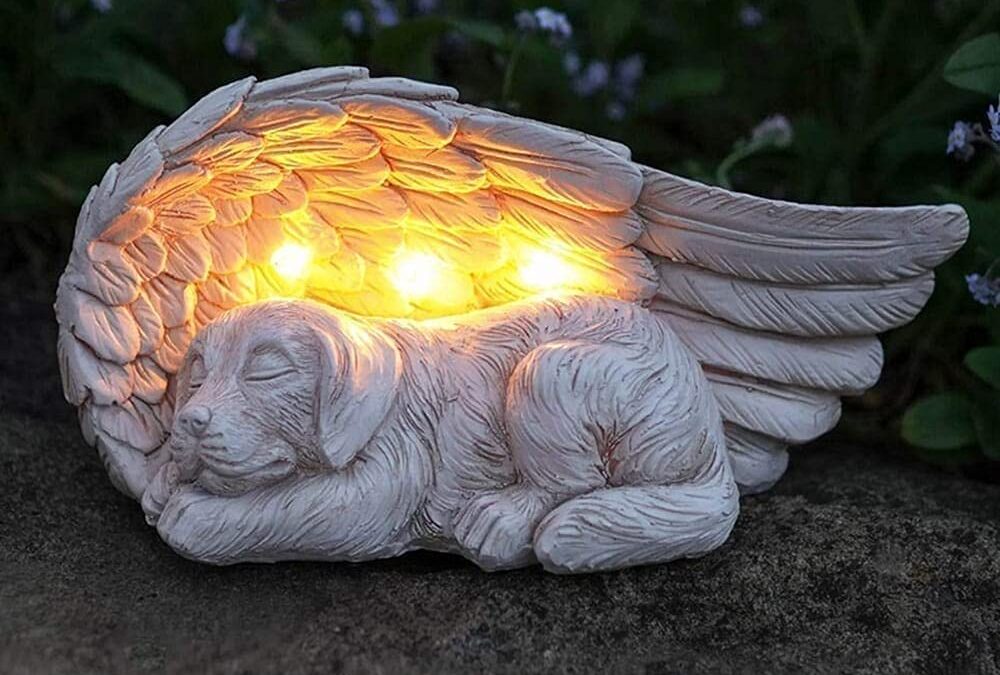
When you’re not sure what to say when a friend or loved one has recently lost their beloved dog, show your sympathy and comfort with a dog angel figurine.
Losing a dog can be a devastating experience as they are often seen as a part of the family, providing companionship, loyalty, and emotional support. It can create a void in one’s daily routine and leave a person feeling lonely and empty. The grieving process can be challenging and involve a range of emotions including sadness, anger, and guilt. Healing takes time, and it is important to remember that it is okay to grieve and to take the time needed to process the loss. While the loss of a dog is never easy, the memories and love that they leave behind can help to ease the pain over time.
Bladder cancer in dogs is a serious condition. My beloved Akita of 13 years died of it. Although he had lived a long, happy life, especially for a large breed dog, I wish I had known what I know now. Although I can’t go back and change his final six months with us, I can share what I learned with you.
First the facts. The cause of dog bladder cancer is unknown, but it is believed that flea and tick collars and sprays can be a contributing factor, so please get rid of these items if you have them in your house. Typically, female dogs are more prone to cancer than males and certain breeds have a higher incidence of cancer including beagles, fox terriers (Scottish, wirehaired fox and West Highland white varieties) and Shetland sheepdogs. Dogs that have been neutered also have a higher risk.
Left untreated, bladder cancer in dogs can block the urinary tract making it difficult or impossible to expel toxins from the bladder. The cancer can also spread to other parts of the body and is life-threatening. Dogs with a bladder cancer diagnosis can survive for up to a year, but that time is full of misery, suffering and humiliation.
Traditional medical treatment for dog bladder cancer includes surgery to move small tumors, chemotherapy (which is still considered an experimental treatment) and use of anti-inflammatory drugs which does not get rid of the cancer, but in some studies, has shown to slow its growth.
If you do not want your dog to undergo radical treatments which can increase pain and suffering, there are healthy options. These are especially important for older dogs who will not be able to tolerate chemotherapy, harsh drugs and may not survive the trauma caused by surgery.
The best natural treatment for dogs is simple and easy. First, feed your dog healthy, organic food (that has no chemicals, cheap grains, byproducts or preservatives.) Junk food kibble alters the pH of the bladder, making it hospitable to bacteria and disease. Healthy, organic food that is comprised mostly of good quality protein will give your dog the nutrients needed for healing.
Second, make sure your dog gets plenty of fresh water. Water is vital to keeping the body hydrated and flushing toxins from the bladder. Rather than give your dog tap water, buy a water filter to remove the chemicals that alter the pH which is a component for preventing bladder cancer in dogs.
Third, it goes without saying that love and attention is healing. Spend time with your dog. Talk to him. Take him on walks and adventures. Run and play with him. Exercise is healing: it relieves stress, bonds participants, removes toxins from the lymph system and increases a sense of satisfaction in life.
In addition to diet, love and attention and exercise, give your dog a daily natural remedy that contains antioxidants which build immunity and fight cancer. This supplement should contain a full spectrum of vitamins and minerals. Perhaps most important, it should contain herbs like Milk Thistle and Mistletoe which are strong antioxidants that make for a natural, gentle and effective treatment for bladder cancer in dogs. These two herbs also help rid the body of toxins.
Since your dog depends on you to make the best healthcare choices, it is up to you to find a method to treat dog bladder cancer that is gentle, yet effective and that does not worsen your dog’s suffering. Think about it: if you choose to give your dog chemo, there is no way for you to tell your dog that even though his suffering is going to be worse, in the long wrong, he might get better. Of course, he also might get worse, since chemo is a poison that often kills the patient. Although this may seem harsh, this is something you must consider.
Dogs don’t understand the point of radical treatments. They only know what they feel in the moment. Make your dogs moments as happy, comfortable and pain-free as possible by choosing to take the natural route. As your dog gets better, continue to follow the steps above and give your dog a daily supplement in order to build a strong immunity needed for a long, healthy and happy life.
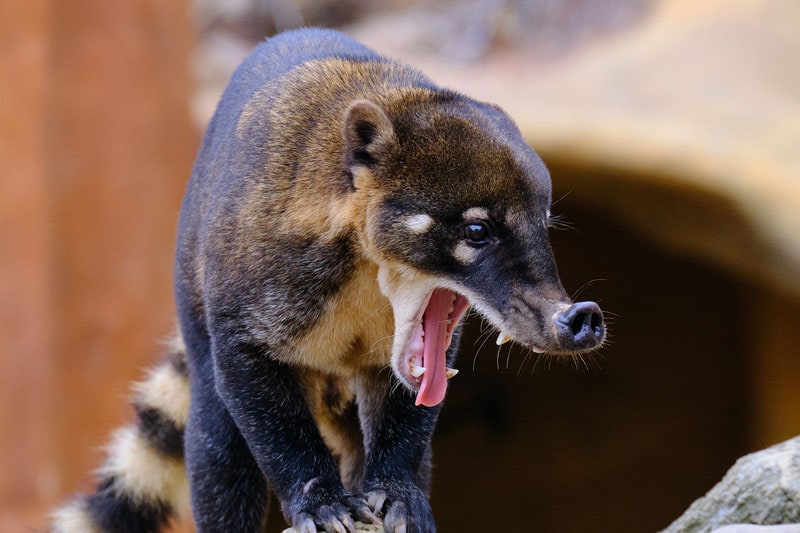
A coatimundi, also known as a coatimundi or coati, is a species of omnivorous mammal native to South and Central America. Coatimundis belong to the same family as raccoons and are known for their distinctive long noses and ringed tails. They are typically found in tropical rainforests and are known for their agility and climbing ability. Coatimundis are social animals and can often be found in large groups, known as bands. They are opportunistic eaters and will feed on a wide range of food sources, including fruits, insects, and small animals. Coatimundis are intelligent and curious animals, and they are popular attractions at zoos and wildlife parks.
There are four recognized species of coatimundi, also known as coati:
The white-nosed coati (Nasua narica): This species is found in Central and South America, from Mexico to Argentina. White-nosed coatis have a distinctive white patch on their nose and are the largest of the four coati species. They are known for their strong social bonds and can often be found in large groups, known as bands.
The South American coati (Nasua nasua): This species is found in South America, from Colombia to Argentina. South American coatis are smaller than white-nosed coatis and have a reddish-brown coat with a white belly. They are agile climbers and are often found in trees.
The eastern mountain coati (Nasuella olivacea): This is the smallest of the coati species and is found in the Andes Mountains of South America. Eastern mountain coatis have a grayish-brown coat with a white belly and are adapted to living in high altitudes.
The western mountain coati (Nasuella meridensis): This species is found in the Andes Mountains of South America, from Colombia to Peru. Western mountain coatis are similar in appearance to eastern mountain coatis, but have a slightly darker coat and are found at lower elevations.
It’s important to note that there is some debate among scientists about the classification of these four coati species and whether they should be considered separate species or subspecies. Some researchers believe that there may be only two species of coati, with the eastern and western mountain coatis being considered subspecies of the South American coati.
3. How long do coatimundi live in the wild and captivity?
Coatimundis are generally considered to be long-lived animals, both in the wild and in captivity. In the wild, coatis typically have a lifespan of around 7 to 10 years, although some individuals have been known to live up to 14-16 years. In captivity, coatis may live longer due to the availability of food, protection from predators, and access to veterinary care. Some coatis in captivity have been known to live up to 20 years. However, it’s important to note that the lifespan of any animal can vary widely depending on factors such as genetics, diet, and habitat conditions.
4. Are coatimundi an endangered species?
Coati are not currently considered to be endangered. According to the International Union for Conservation of Nature (IUCN), the white-nosed coati (Nasua narica) is classified as “Least Concern,” while the South American coati (Nasua nasua) is classified as “Near Threatened.” The eastern mountain coati (Nasuella olivacea) and western mountain coati (Nasuella meridensis) are both classified as “Data Deficient,” meaning that there is not enough information available to determine their conservation status.
Although coatis are not currently endangered, they do face some threats in their natural habitat. These threats include habitat loss and degradation, as well as hunting and poaching. Coatis are also susceptible to diseases and parasites, and some populations may be negatively impacted by climate change. However, overall, coatis are considered to be relatively common and widespread throughout their range.
5. How did the coatimundi get its name?
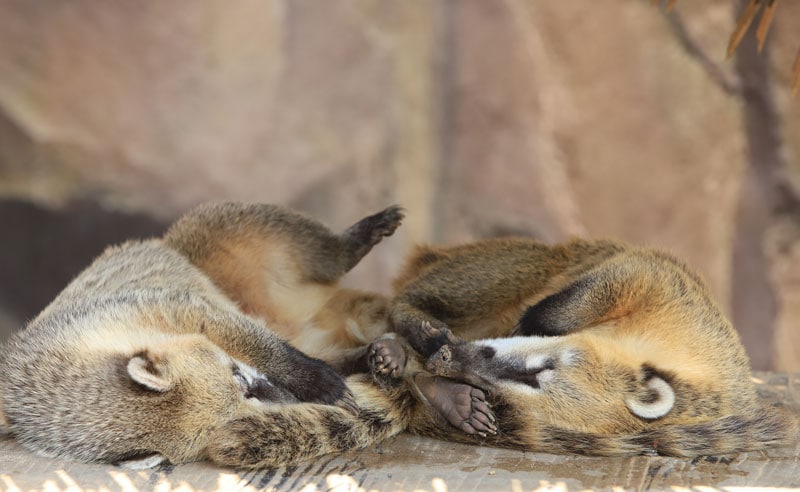
The word “coatimundi” is derived from the Tupi-Guarani language, spoken by indigenous people in South and Central America. The term “coati” is a shortened version of the word “coatimundi,” which means “red nose” in Tupi-Guarani. The Tupian word, kua’ti, is a combination of “cua” meaning “belt” and “tim” meaning “nose,” describing the way the coati sleeps with its nose tucked into its belly. The term is thought to refer to the distinctive red noses of the South American coati (Nasua nasua) and white-nosed coati (Nasua narica), two of the four recognized species of coati. The other two species, the eastern mountain coati (Nasuella olivacea) and western mountain coati (Nasuella meridensis), are not named after their nose color.
6. How do coatimundi communicate?
Coatimundis are social animals and use a variety of vocalizations, body language, and scent marking to communicate with each other. Coatis are known for their distinctive calls, which include chattering, chirping, and growling sounds. These vocalizations are used to communicate a range of emotions and intentions, such as aggression, fear, playfulness, and excitement.
Coatis also use body language to communicate with each other. For example, they may arch their backs, puff out their fur, or flare their nostrils to show aggression or dominance. They may also use more subtle gestures, such as touching noses or grooming each other, to show affection or social bonding.
In addition to vocalizations and body language, coatis also communicate through scent marking. Coatis have scent glands on their face and tail, which they use to mark their territory and communicate with other coatis. They may rub their face or tail on objects or vegetation to leave a scent mark, which other coatis can detect and interpret. This scent marking helps coatis to establish social hierarchies and communicate with each other about their presence and intentions.
7. Do coatimundis live in packs?
Coatis can often be found in large groups, known as bands. These bands are usually made up of females and their offspring, and they can range in size from a few individuals to over 20 individuals and sometimes up to 30. Coatis are known for their strong social bonds and can often be seen grooming and playing with each other. Offspring reach sexual maturity at about 2 years of age.
Males, on the other hand, are typically more solitary and tend to live on the fringes of the band, only joining the group during the breeding season. Once the breeding season is over, males will leave the band and establish their own territories. After male babies reach two years of age, they go off on their own, while the females remain in the band with their mothers.
Top 10 Questions About The Coatimundi Answered 165
Coatis are highly territorial and will defend their territory from other coatis, as well as from other animals. They use a variety of vocalizations, body language, and scent marking to communicate with other coatis and establish their dominance in the group. Coatis are also known for their intelligence and curiosity, and they are known to explore their surroundings and forage for food.
Accustomed to arboreal life, coatimundis mate in the trees, creating nests for their young among the branches and leaves. The offspring stay in the nest with their mother for 5 to 6 weeks before the mother rejoins the band.
8. What is special about coatimundi tails?
Coatimundis are known for their distinctive ringed tails, which are longer than their body length and can be used for balance and communication. Coatis use their tails to help them balance when they are climbing trees or other structures, and they can also use their tails as a “fifth limb” to help them reach for food or other objects.
In addition to their functional uses, coatis’ tails also have a social function. Coatis use their tails to communicate with each other and to establish their dominance in the group. For example, they may hold their tails upright and flare the fur to show aggression or dominance, or they may wag their tails to show playfulness or excitement.
Coatis’ tails are also used for scent marking, as they have scent glands on their tail that they use to mark their territory and communicate with other coatis. When they are agitated or threatened, coatis may also use their tails to make a loud, drumming noise by slapping their tails on the ground, which can be used to warn other animals or deter predators.
Top 10 Questions About The Coatimundi Answered 166
9. Do coatimundi have double-jointed ankles?
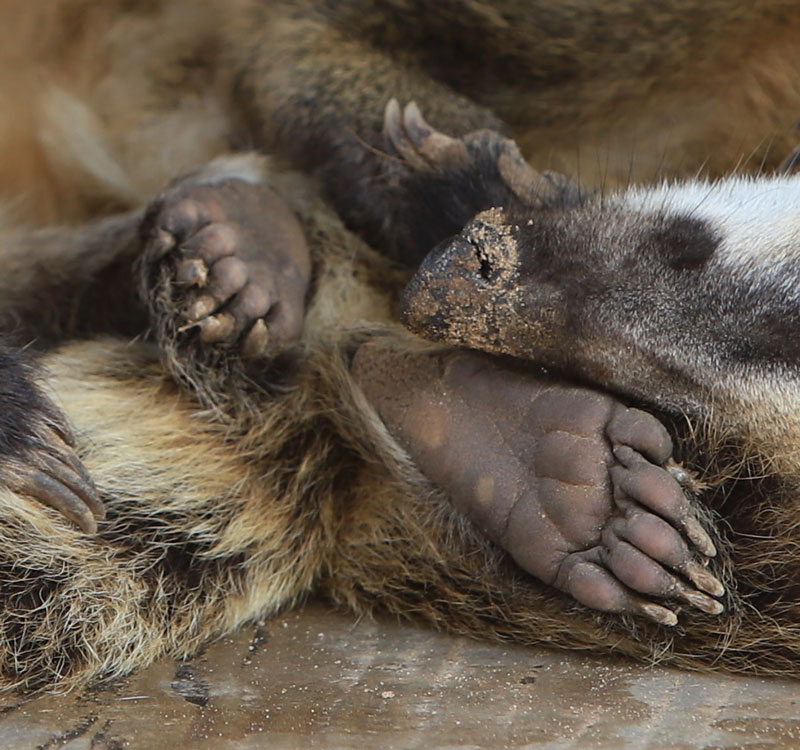
It is reported that Coatimundis have developed double-jointed ankles. Coatis are known for their agility and climbing ability, their agility and climbing ability is due to their strong legs and sharp claws, which allow them to grasp and hold onto objects and climb trees and other structures. Their ankles can rotate a full 180 degrees, this allows them to climb down trees headfirst at high speeds, helping them evade predators. These joints are also extremely flexible. Their front paws are highly dexterous and help them to escape from almost any human-made enclosure or cage.
10. What do coatimundi eat?
Coatis are opportunistic eaters and will feed on a wide range of food sources, including fruits, insects, small animals, and even carrion. They have a long, flexible snout and are known for their strong sense of smell, which they use to locate food.
In the wild, coatis are known to feed on a variety of fruits, such as bananas, papayas, and avocados. They also feed on insects, including beetles, grasshoppers, and termites. Coatis are also known to hunt and feed on small animals, such as lizards, snakes, and rodents. In addition to these food sources, coatis are also known to scavenge for food and will feed on carrion if it is available.
Coatis are found in a variety of habitats, including forests, savannas, and grasslands, and their diet can vary depending on the availability of food in their particular habitat. Coatis are known for their intelligence and curiosity, and they are known to explore their surroundings and forage for food.
Summary
Coatimundis, also known as coati, are omnivorous mammals native to South and Central America. There are four recognized species: the white-nosed coati, the South American coati, the eastern mountain coati, and the western mountain coati. Coatimundis are known for their long noses and ringed tails, and they are typically found in tropical rainforests. They are social animals and can often be found in large groups. Coatimundis have a lifespan of 7-10 years in the wild, and up to 20 years in captivity. They are not currently considered endangered, but they do face some threats such as habitat loss, hunting, and disease. The word “coatimundi” is derived from the Tupi-Guarani language and means “one who digs with the nose.”
You May Also Like This Article…
Top 10 Questions About The Coatimundi Answered 167

































&url=https://texaspetcompany.com/can-you-use-dog-dewormer-on-cats/&media=https://texaspetcompany.com/wp-content/uploads/2020/04/Texas-Pet-Company-Worm-Defender-Dog-Treat-Supplement-Front-1024x963.png)