Parasites are organisms that survive by feeding off of other creatures. Among cats, parasites generally feed on the animal’s blood. Detecting internal parasites can be difficult, but a close inspection of skin and fur is usually all that is needed to uncover traces of external parasites such as ear mites and fleas. There are many types of worms that are internal parasites to cats. If you see small, rice like debris around your cat’s anus or in her bedding, take her to your veterinarian. He will need to run simple tests to identify what type of worm is present so that he can prescribe the proper medication to eliminate the parasite.
Coccidia are microscopic parasites. They live in cells within the lining of the intestines. The most common symptom is diarrhea. Left untreated, the animal becomes extremely weak and dehydrated. Fortunately coccidiosis is treatable. Drugs such as sulfadimethoxine (Albon) and trimethoprim-sulfadiazine (Tribrissen) are effective in the treatment and prevention of coccidia. However, these drugs do not kill the parasites, but rather inhibit reproduction – elimination of coccidia from the intestine is slow.
Ear mites take up residence in a cat’s ear canals. As they feed, they cause intense itching. A cat suffering from an infestation of ear mites scratches behind her ears often and is seen violently shaking her head on a regular basis. If you look inside her ears, you will see dark flecks that resemble coffee grounds – these are the mites’ droppings. If you suspect ear mites, contact your veterinarian.
There are several effective treatments for ear mites, such as Fipronil (Frontline) and Selamectin (Revolution). Ear mites are easily treated with eardrops, but are very contagious to other cats. If you have a multi-cat household, isolate the infected cat as soon as possible. Ear mites are not transmitted from cats to humans.
Ringworm is not a true worm, rather the name for a type of fungus, related to the fungus that causes athlete’s foot in humans. It usually causes no discomfort, but is highly contagious to other cats and humans. If left untreated it weakens the immune system and leaves your cat vulnerable to other, more serious diseases.
Fleas are perhaps the most infamous pet parasite. Although they eat no more than a drop of blood each, a flea infestation can cause anemia in adult cats and death in kittens. In addition to literally sucking the life from your cat, fleas often transmit tapeworms, as serious internal parasite. Just a few fleas can cause great discomfort to your cat, especially if she is one of the many animals allergic to fleabites. The best way to conquer a flea invasion is to prevent it in the first place.
Daily grooming, especially if you allow your cat outdoors will help you keep one step ahead of the flea hordes. As you flea-comb your cat, dip the comb into a container of soapy water to kill the fleas. The soap film coats and suffocates the fleas.
Ask your veterinarian about preventative flea medications. These are given to your cat orally. The chemical they contain is harmless to your cat, but makes fleas sterile. It is absorbed into your cat’s blood, so when a flea bites her it cannot reproduce.
If your cat has had fleas in the past, it is very likely that you have flea eggs and larvae in your carpet and upholstery. Your veterinarian can suggest a “flea bomb” based on how bad the infestation is. It is important to follow the package instructions carefully and repeat treatment as directed in order to make sure all the generations are eliminated.
Everyone loves a puppy. When you see a puppy isn’t the temptation to bring it home a strong one? This especially true for kids because they just see the here and now; they don’t think about what is going to come later. However, there are adults who fall into this category too; they see the dog and “fall in love” and that’s it. They are taking a new puppy home.
Just say “NO” to that little voice that tugs at your heart to bring that puppy home, or at least say “WAIT.”
Getting a puppy should be as carefully considered as adding a member to your family. Without careful consideration, you are going to find several unwelcome surprises, like these:
1. New Puppy Training – training a puppy doesn’t have to be hard, some it depends on the breed. However, it is work. It takes time and patience. Accidents will happen so be prepared.
2. New Puppy Care – puppies like kids spend some time at the doctors. There are vaccinations, physicals and tests. Plus there are also going to be preventative items like a heart worm preventative and flea and tick treatments.
3. Food – they have to eat too. Table food is not the best option and good-quality food can be costly, especially depending on how big that puppy will get.
4. Freedom – Puppies and dogs can suck up a lot of freedom. Depending on your dog you are probably giving up sleeping in on weekends. Plus there is the family getaway, are you planning on bring your furry friend? If not, special arrangements will need to be made, and these might cost you a few dollars.
5. Exercise – it’s just not enough to let your dog run around in the yard. Is the yard fenced in? If not, yard running is probably not an option. It’s not only physically important to take your dog for a walk, but it is important to their mental health as well.
6. Sickness – like people, dogs get ill too. Some people hardly ever have to take their dog to the veterinarian’s office but others are not so fortunate. Visits, tests and medicines all cost money, and it can get expensive.
Puppies are wonderful. A new puppy in your home can be a fantastic addition. It is documented how a dog can improve health and contribute to longer life. That said, bringing a new puppy into your home, and family is a serious decision that requires planning, thought and consideration.
There is always the possibility and there are also ways to prevent problems.
The best way to make certain, germs and/or bacteria is not passed around is to practice good hygiene. Cleanliness seems to be the best prevention of common illnesses.
However, one important thing is, to keep in mind is the current state of everyone’s health. People with a weak immune system, people suffering from serious illnesses, people with HIV/AIDS, people with organ transplants, people being treated for cancer and infants and young children are all at a greater risk of picking up a disease from an animal than most other people.
With few exceptions, carelessness in handling a pet along with not washing your hands after cleaning up after a pet, are primary causes of illness connected with pets.
What are some of the possible illnesses that can be associated with animals? The most feared in my mind is rabies.
What is rabies? It is a disease caused by the rabies virus and is transmitted though a bite from an animal that is carrying the virus. Today most domesticated animals are vaccinated for the rabies virus as dictated by most state laws.
However, a bite from an unknown animal, domestic or wild, until it is known that the animal has been vaccinated, has to have the recipient of the bite, treated as if the animal has the virus.
It may take from one to three months for a person to show signs of the virus and by then it is too late for any treatment to work.
It is very important that your pet, even if it is an inside only pet, be inoculated against the rabies virus.
Teaching children to avoid trying to pet strange dogs or cats, unless supervised, along with avoiding the temptation to catch a wild animal, is one of the best lessons you can teach your child.
There are many germs/viruses that can be picked up from dogs other than rabies, most of which come from contact with a dog’s feces. That is why cleanliness seems so important. To clean up after your dog eliminates, use plastic gloves, a pooper scooper or a plastic bag to avoid touching the feces.
A dog can carry many types of germs, bacteria and/or virus and not be ill, but you can pick it up and suffer. Most illness caused by pets usually run the gamut of diarrhea, vomiting, some fever and muscle aches. As with any illness see, your medical provider.
Cats too, can pass on a disease or two to their humans, but in general you are most likely not going to get sick from touching or owning a cat.
Cat scratch fever can come from a scratch or bite, but using normal precautionary measures such as washing the wound and putting an anapestic on it, can generally prevent any illness. Symptoms of cat scratch disease can include infection at the point of injury, swollen lymph glands, some fever, and a loss of appetite.
Another disease associated with cats is Toxoplasmosis, however people are more likely to get it from eating raw meat or gardening.
What is toxoplasmosis? It is a disease caused by a parasite, about 60 million people are infected by this bug and do not know it. You can get it by swallowing cat feces.
Yuk, you say why would anyone do that? Actually just by touching your mouth, eyes, or nose you can transmit it to yourself. The symptoms are flu like. It particularly dangerous for pregnant women as it can be transmitted to the fetus.
When cleaning the litter box always use caution and refrain from handling any feces. Keep pets away from the litter box, along with children. For some odd reason dogs seem to enjoy looking for treats in the litter box.
What other diseases can be transmitted to humans by pets?
Salmonellosis, which is a bacterial disease caused by the bacteria Salmonella. Most of the time people get it from infected chicken, eggs or other contaminated food. The symptoms can cause severe diarrhea, fever and stomach pain.
The virus salmonellosis can also be passed on to humans by handling such pets as reptiles (lizards, snakes and turtles,) baby chicks, ducklings and occasionally a cat or dog.
Again it comes from touching the feces of the animals and not washing your hands after doing so. Some animals can have it on their bodies, as they have picked it up from the ground.
Water can also be a point of contamination, where animals have access to it and due to ground run offs, feces and urine can flow into the water, humans need to be careful.
Leptospirosis is a bacterial disease that affects humans and animals.
How can you get it?
By exposure to many things, as the bacteria is secreted through the urine of infected animals. It can be found in water, (ponds and streams) food, or soil containing urine from the infected animals. Swallowing the water (swimming in a pond or stream,) contaminated food or by hands that have been in contact with a source and you have rubbed your eyes, nose or mouth or through a cut on your skin.
The symptoms include high fever, severe headache, muscle aches, vomiting, diarrhea or a rash. Seek medical treatment as soon as possible especially, if you have been swimming in the “old swimming hole.”
Leptospirosis is found worldwide, but mainly in temperate and tropical climates. Pets can acquire it from drinking out of a contaminated birdbath.
Ticks carry diseases and ticks bite dogs, so the rule here is, when removing ticks from your pet be extremely careful. Your chances of getting either Lyme disease or Rocky Mountain Spotted fever are slim and none, unless you are tramping around in areas of the country where those ticks are prevalent and are not wearing protective clothing.
Fleas can cause tapeworm in household pets. The animals get it by swallowing a flea that has been infected.
Can you get tapeworm, certainly, but only if you swallow and infected flea. Keeping your pet and household flea free will prevent either of you from becoming infected. Last, but not least in this list of things, is Ringworm, this is a skin and scalp disease that can be caught not only from animals, but people, too.
How can you get ringworm?
Ringworm is a contagious fungus that can be passed on from person to person, pet to person or pet to pet.
It has nothing to do with worms, but is a fungus that lives in humans, pets and rarely in the soil. Ringworm appears as, a flat round patch on the skin and then conforms to a ring like patch. It can be treated by a fungus killing medicine usually taken orally in tablet form or by an ointment applied to the affected area.
The important thing here is not to share personal items with an infected person, do not touch infected areas, keep children away from infected pets, and to thoroughly wash all items handled by the infected pet or person.
Now that I have made you wonder, should I ever get a pet, the answer is of course.
Plain old common sense hygiene is the answer to most pet to people diseases. I have never heard of a person dying because of a disease caught from a cat or dog. With the possibly exception of someone being bitten by a rabid animal and not seeking treatment.
Keeping play areas for children free from being your pet’s bathroom area and keeping feces cleaned up is the safest thing you can do.
Teach your children to wash their hands frequently after playing with their pet and you are on your way to a long and happy life
Electronic Flea collars may be the newest weapon in the war on dog fleas. Dogs have been mans companion for thousands of years. Dogs serve mankind in ways that cannot be duplicated by technology. Unfortunately the parasites that our dogs carry have plagued mankind as well. Fleas are a constant irritant to man and dog as well as vector for disease. In the past the best way to get control fleas on your pet was to wash and comb them on a regular basis. The development of pesticides like DDT went a long way in treating our dwellings and animals for many years. However many of these pesticides also had side effects or were damaging to the environment. In addition many of these pesticides were ineffective on fleas.
In the early 1960s time release pesticide technology was married to plastics to make the modern day flea collar. They were hailed as the cure for all flea problems. They did a good job of reducing flea bites on most animals that were under severe and constant attack. They did not solve the problem of flea infestations in homes or kennels. In addition the chemical caused skin irritation or dermatitis on many animals that was worse than the flea bites. Also the collars were most effective only on the front half of the dog causing some people to place a second collar around the dog’s waist and belly. One thing the new collars did was to kill the dreaded ticks. Tick will crawl the highest point on a dog before taking in the blood meal. This mean they will try to crawl past the flea collar on the way to the dogs head placing them in contact with the insecticide. This makes the collar a great way to stop ticks but leaves much to be desired when it comes to controlling fleas. All of which cause many people to consider using an electronic flea and tick collars.
Before you lay out the money for an Electronic Flea Collars you should consult with your dogs Vet. Most Vets will tell you that the most effective method of controlling fleas is through the use of topically applied flea medication. Most dog owners are familiar with Advantage, Frontline and the Program brands of flea medication. They all use a chemical growth regulator methoprene that prevents flea larva from developing into an adult. These medications have been shown to be very affective in solving flea problems. In fact a dog that has the medication on it can literally remove all the fleas in a house over a month long time period. Adults bite the dog and then drop off to lay eggs then die. These eggs hatch and the larva die. So why would you consider using any other method of flea control?
Many dog owners are concerned about the side affects of methoprene on their animals and as a result are looking for flea control alternatives. Electronic pest control devices are divided into several different types. Some use high pitched or ultrasonic sound to repel all insects and spiders while others use devices that produce an electromagnetic field to repel pests. Recently a new technology was developed that using ionic air cleaning. Basically they all claim to drive the pests away from the area that they are placed in. Electronic flea collars use the same technology to achieve to drive the fleas away. The bottom line question is does these device work? Entomologists and other researchers have determined that these electronic flea collars do not perform as claimed. electronic flea and tick collars manufactures have not, to date, provided any scientific proof that their products perform as claimed. They all use of customer testimonials as a selling point for their products which future makes their claims less than credible. It appears that it is far better to use the topically applied flea medications to protect the health, comfort and well being of your dog. Given the facts I would assert that it is unwise to depend on any Electronic Flea Collars to protect your dog from fleas.
Fleas will drive you insane. And they drive our doggies insane as well. It can seem like they run your life but there is hope – fleas CAN be controlled.
Flea control breaks down into two categories – Prevention and Treatment. If you are not in a bad way with fleas, maybe a few here and there, then you are in the Prevention phase. This is controlled by using a safe, all-natural pest control product that will not harm your doggie. You would want a product that mixes easily with water to add to the baths or lightly spray on as needed. And make sure there are good directions!
What you certainly DO NOT want is a toxic, synthetic chemical that could harm your precious baby! Many traditional pesticides are harmful and can shorten a pet’s life by as much as 25%. Therefore, find your favorite all-natural pest control product and control fleas for your Fur Baby.
Flea Prevention:
• Take your favorite all-natural pest control product and spray it into your hands before massaging it into the fur.
• Spray into your hands to apply to face and snout.
• Reapply as needed.
• Bathe Rover using some of your favorite all-natural pest control product mixed in the shampoo and bath water.
If you are dealing with an infestation, that is whole other thing. I would describe an infestation as the pet is constantly itching and you are getting flea bites on your ankles. That is a moderate infestation. If that is the case, here are the steps:
Flea Infestation, Moderate:
Notes:
Control the source of fleas, treat the environment, and then treat the pet.
If the dog stays outside for periods of time, assume that is where the fleas are coming from.
• Vacuum the house thoroughly paying careful attention to areas Buddy sleeps or spends time.
• Spray your favorite all-natural pest control product on all baseboards, carpeted areas, dog bedding and areas for sleeping.
• Wash all dog bedding using the hottest possible settings in the washer and dryer.
The most important directive when controlling a flea infestation is that the pet is the LAST step in treatment. First the source of fleas is addressed, then the environment treated, and then the fur baby gets treatment. The poor animal is a victim just as much as you and they are not the cause – the fleas are coming from somewhere and need to be controlled!
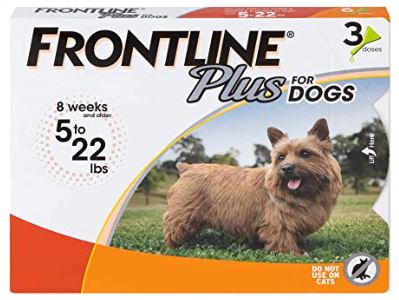
Frontline Plus for dogs is a topical medication that works against tick and flea infestations. Its active ingredients, S-methoprene, and fipronil act to not only kill all existing ticks and fleas but also work on flea eggs and larvae to make sure that they do not mature into adults.
This medication is known to have 100% efficacy within the first 48 hours of application. Apart from this, Frontline Plus is also preferred by many due to its long-lasting effect. Once applied, this medication can be effective for a whole month, even if you bathe your dog or take it for a swim.
This is because fipronil accumulates in the animal’s sebaceous glands, from where it is consistently released onto the skin and coat.
Frontline Plus for dogs is a safe medication to use and can be used on puppies and kittens as early as two days after birth. Although Frontline side effects are not common, they do at times occur and are mostly related to the alcohol that is used as a solvent.
Frontline Plus for Dogs Side Effects to Look For:
Common questions:
Can Frontline make dogs sick?
Can Frontline cause seizures in dogs?
What are Frontline side effects?
Is Frontline Plus safe for dogs?
If side effects occur following the use of Frontline Plus for dogs, they would generally be related to effects on the skin. There are also side effects that have at times been seen to be neurological or mental in nature.
Skin-Related Side Effects
An immediate reaction your dog could have following the application of the medication is skin irritation. Itching and hair loss at the site of application have also been reported in some dogs. Skin irritation usually manifests in the form of redness or skin discoloration and itching. Most often, the side effect is temporary and subsides in a few days. However, if the irritation does not subside or appears to be more severe than before, you should immediately consult your veterinarian.
When skin irritation occurs, your dog will try to scratch the area. This will aggravate the condition. So, keep an eye on your pet and prevent any scratching because scratching will lead to the medication spreading to their paws and other areas of their body, which they can lick. Scratching could also make the area bleed, which in turn would lead to the medication entering the bloodstream.
Neurologic Side Effects
Some of the neurologic side effects could include:
Increased drooling
Over-sensitivity to noise, light, or touch
Becoming quiet and appearing depressed
Aggression and anxiety
Rapid heart rate
Breathing or respiratory effects
Panting and vomiting have also been seen in some dogs, although it passes quickly
If you see any of these symptoms persisting in your pet, consult your veterinarian immediately.
Detailed Mechanism of Action
Have you ever wondered how Frontline Plus actually works? It’s pretty fascinating! This flea and tick treatment uses two powerful ingredients: fipronil and (S)-methoprene.
Imagine fipronil as a tiny superhero that targets the nervous system of fleas and ticks. When it’s applied to your dog, it spreads through their skin oils, making its way into the bloodstream. Once a flea or tick bites your pup, fipronil disrupts their nervous system, causing paralysis and eventually death.
On the other hand, (S)-methoprene is like a villain to flea eggs and larvae. It prevents them from maturing into adult fleas, effectively breaking the life cycle. So, while fipronil is busy taking out the adults, (S)-methoprene ensures that no new pests are hatching to take their place. Pretty neat, right?
Frontline Plus for Dogs: Side Effects on Human and Other Species
Side effects on humans are rare. The most commonly reported effects are skin, mouth, and eye irritation. If this occurs, immediately wash the affected area with lots of clean water. The best way to avoid this effect is to apply Frontline Plus for dogs just before bedtime and allow the medication to completely dry overnight before cuddling the dog. Do not allow your dog to sleep in your bed after the application of the medication. Although severe reactions are extremely rare, a human being could experience vomiting, agitation, and seizures. If such effects occur, you should immediately consult your physician.
With regard to its effects on other species, the first thing to remember is DO NOT apply Frontline Plus for dogs on cats. There are flea treatments available specifically for cats. This medication could prove to be lethal for rabbits and aquatic species, so take adequate care to prevent such species from coming in contact with the medication.
Reviews of Frontline Plus for Dogs
Didn’t work at all Noticed my dog had fleas about two weeks ago. Was recommended frontline plus by the lady in pet stock. The infestation is now worse I would say. It’s questionable whether this even made the slightest difference.
Absolute waste of money. I have applied Frontline Plus on my 2 German Shepherds 3 times now and it has made no difference at all. Time to try another product.
ExcellentI bought Frontline Plus from BudgetPetCare after reading an extended review at buy flea tick medicine and I tried it for 6 months on my dog. To be honest, my experience with Frontline Plus has been quite positive throughout this time. Initially I felt that it was not working but in first two months it vanished almost all my dog’s fleas and ticks. I still continued applying it for next four months and I am really glad that after that I had never needed to apply the Frontline Plus.
Bad Product Frontline Plus false advertising Used frontline plus 2 days ago and still have fleas on my maltese.I am taking my 6 pack back to shop for a refund. Product is no good, do not buy Frontline Plus .Maker should be charged for false advertising and misleading the public under consumers law. I demand a full refund for a product that does not do what it is claimed to do.
Natural Alternatives: Flea and Tick Protection Without the Chemicals
I totally get it—sometimes, the thought of putting chemicals on your dog just doesn’t sit right. If you’re one of those pet parents who’s looking for a more natural approach to flea and tick prevention, you’re not alone. Here are a few alternatives that might be worth considering.
Essential Oils: A Little Goes a Long Way So, I’ve tried this myself—peppermint, lavender, and cedarwood oils, mixed with water, and spritzed lightly on my dog’s fur. Not only does it keep the bugs away, but it also makes them smell like they’ve just come back from a spa day. Just be sure to dilute the oils properly—too much can irritate their skin.
Apple Cider Vinegar: Your Kitchen’s Secret Weapon Who knew apple cider vinegar could be a flea-fighting superhero? I mix it with water, spray it on my dog, and boom—no fleas! It’s super cheap and works wonders, but make sure to test a small patch first just to be safe.
Diatomaceous Earth: Nature’s Bug Buster This one’s a little less well-known, but I’ve heard great things about diatomaceous earth (DE). You sprinkle it lightly on your dog’s fur and around the house, and it’s said to help kill fleas by drying them out. It’s all-natural and harmless to pets, but I always make sure not to let my dog inhale it. Safety first!
Herbal Flea Collars: A Natural, Ongoing Solution For a hands-off option, herbal flea collars can be a game-changer. They’re infused with essential oils and offer a steady defense against fleas and ticks. I love how simple it is—just put it on and forget about it (until it’s time for a replacement, of course).
Alternatives to Frontline Plus
If you’re on the hunt for flea treatments that might suit your furry friend better than Frontline Plus, there are several options worth considering. Each has its own effectiveness and safety profile, so let’s break it down!
Bravecto
Bravecto is an oral flea and tick treatment that provides protection for up to 12 weeks with just one dose. Many pet owners rave about its convenience and effectiveness.
Effectiveness: It works quickly—often within hours—and is particularly praised for its long-lasting protection. Safety: Generally well-tolerated, but as with any medication, some pets may experience side effects like vomiting or lethargy.
Advantage II
Advantage II is a topical treatment that targets fleas at all life stages. Effectiveness: It kills fleas within 12 hours of application and prevents future infestations by stopping flea eggs from hatching. Safety: Most pets tolerate it well, but occasional skin irritation can occur.
Seresto Collar
The Seresto collar offers a unique, long-lasting solution for flea and tick prevention. Effectiveness: It provides up to 8 months of continuous protection without the need for monthly applications. Safety: Generally safe for most pets, but some owners have reported reactions to the collar material itself.
User Testimonials
To give you a clearer picture of how these treatments perform in real life, here are some testimonials from pet owners:
Bravecto
“I switched my cats to Bravecto after struggling with fleas for ages. It’s been brilliant! We’ve had no issues whatsoever since we made the switch.” — User from Reddit
Frontline Plus
“I treated my tuxedo, Max, with Frontline Original 2 days ago and just ran a flea comb through his fur picking up about 15 live fleas in the process. Seems Frontline is totally useless for fleas!” — User from Reddit
“I used one of three doses on my kitty, the night the package arrived. By the following night, my kitty was scratching incessantly, worse than before the treatment. A total waste of money.” — Review from Chewy
Advantage II
“I’ve been using Advantage II for my dog for the last year and it works like a charm! No more scratching and biting at his fur—he’s back to being his happy self!” — User from Dog Food Advisor
Neurological Side Effects: What to Watch For
Although rare, some dogs can have neurological reactions to Frontline. It’s important to recognize the signs, especially if you notice anything unusual in your dog after applying the treatment. Here’s what to look for and what you should do if you spot these symptoms.
Twitching and Shaking
If your dog starts twitching or shaking, especially their muscles or legs, it’s not just a case of excitement or being cold. This kind of muscle jerking could be a sign of a neurological reaction to Frontline.
What to do?
If you notice twitching, stop using Frontline right away. It’s crucial to call your vet as soon as possible. They’ll want to know when you applied the product and the exact symptoms your dog is showing.
Seizures: A Major Red Flag
Seizures are one of the most alarming neurological side effects. If your dog suddenly collapses, starts convulsing, or loses control of their body, it can be terrifying. They may foam at the mouth, have their eyes roll back, or jerk uncontrollably.
What to do?
If your dog has a seizure, don’t wait around. Call your vet immediately. If the seizure lasts more than a couple of minutes, head to the vet right away. Even if it’s a short seizure, it’s always best to have your dog evaluated by a professional.
Disorientation and Odd Behavior
Another sign of a neurological issue is when your dog starts acting disoriented—walking in circles, bumping into things, or looking confused. This could be a result of Frontline affecting their nervous system.
What to do?
If you notice your dog acting disoriented, keep them in a safe space, away from stairs or hazards. Call your vet to discuss the symptoms and get advice on the next steps.
Dogs may be a man’s best friend, but many animal lovers adore keeping cats as pets because of the animal’s warm yet independent spirit. There are steps that you can take to keep your pet healthy and to avoid any issues or concerns. By using a combination of care, prevention and pet health products, you can ensure your cat’s companionship for years to come.
There are two important ways in which you can maintain your cat’s health and happiness. Scheduling annual veterinarian check-ups allow a professional to give special care and attention to your cat. This allows the vet to stay current with the shots and regular exams that felines require. Paying attention to any physical changes in your pet will give you a better idea of your pet’s health. Investing in a few specialized, approved pet health products can also make a significant difference.
Conduct an overall evaluation of your cat when you are petting or sitting with it. Take a quick look at the animal from nose to tail. It is smart to do this on a regular basis and at a set time, your pet will grow accustomed to it and you will not forget its daily check-up. Alert your veterinarian if you discover any potential concerns. Begin with your cat’s head. Are its eyes clear and alert? Are its ears pink and clean? Do the ears give off a pungent smell that seems abnormal? Have bugs appeared as a dark, thick formation inside the cat’s ears? Are its gums pink and teeth healthy, clean and strong? Does tartar reside along the gum line? Has your cat developed unpleasant breath?
Gently feel and inspect your pet’s body for sores, lumps, puffiness, bumps, scratches, parasites or irregularities. Keep an eye out for flea dirt, which is similar in appearance to black pepper and appears red when dampened. Check your cat’s paws, ears and tail.
Feel free to ask your vet any questions that you may have. Don’t be afraid to verify what is and isn’t normal.
Regularly brushing your cat keeps it looking neat and tidy. Rubber brushes remove dead skin cells and loose hair. Combs that are specially designed for a cat help lift fleas and small bugs out of its hair.
It is imperative to clip your cat’s claws on a regular basis. When this isn’t done, a cat’s claws can grow into its paw pads, which may result in pain and infection. A veterinarian will be happy to show you how to properly trim a cat’s nails in a way that will not harm the animal. While many people choose to have their cats declawed, this is not the only way to eliminate its scratching. It can also be very painful for the pet. Felines can be trained to scratch only in designated areas, such as a well-designed post.
Cat owners should do as much research as possible regarding the proper care of cats. They should also own at least one book or pamphlet on emergency first aid. By familiarizing yourself with emergency procedures, you could possibly save your cat’s life. Do not attempt to treat your cat with any medications, like aspirin, ibuprofen or suphedrine. Many medicines intended for humans can be poisonous to cats.
Among pet owners, a popular dog grooming product sold over the internet is K9 advantix, and a lot of online stores sell them at big discounts. Advantix for dogs kills mosquitoes, fleas and ticks. The medication prevents parasitic attack, protecting your dog from bites, allergic reactions and infestation. K9 Advantix is the best parasite control measure for your dog.
Allergic reactions are common for dogs bitten by mosquitoes. Watch your pet for symptoms of lethargy, diarrhea and vomiting. These are indications of allergic reaction to mosquito bite. Other health problems can also ensue. When bitten by mosquitoes, your dog can’t help scratching itself and it can possibly lead to infection. Applying the medication to your dog’s hair and skin repels mosquitoes, thus those parasites can’t even come near your pet.
A dog infested with fleas frequently scratches and chews. White patches begin to appear on its skin and hair loss occurs. Treat fleas early on because they can transmit other parasites, such as tapeworms. Cheap advantix for dogs cures fleas and tapeworms attack.
K9 advantix is a trusted product because it kills ticks- disease- causing organisms that attach themselves to your dog, feeding on its blood. At worst, tick infestation can cause paralysis to your pet, or alarming conditions Ehrlichiosis and Babesiosis. The advantix medication kills and destroys ticks fast, removing them from your canine’s skin.
How To Use K9 Advantix for Dogs
The medication is formulated for dogs and puppies, not any other pets or animals. Here’s how to apply the formula to your pet’s furs or hair:
Part your dog’s hair until you see its skin.
Wet the applicator with K9 advantix and place on your dog’s skin.
If your dog weighs 25kgs or less, apply advantix only to a single area, the skin between the shoulder blades.
If your dog is heavier, weighing more than 25 kgs, apply the medication on 3 spots from your dog’s back to its tail.
When being treated, isolate your dog. Keep it away from other pets for 1 hour until the application thoroughly dries.
Use only one applicator every time you treat your dog.
Because of its effectiveness and popularity, you can buy K9 advantix at almost any pet store on the internet. But always note the caveat- buy products from an accredited and credible merchandiser. Other than being guaranteed of a safe and genuine product, you can also avail of a big discount.
Use cheese as a treat when you are training your canine companion. Cheese is nice change of pace for your dog from packaged treats. Dogs typically love cheese and will consider it a fine treat. Do not overdo it though, cheese can have a high sodium content. Your dog could be sensitive to this.
Young puppies are prone to chewing on their owners belongings. You can address this problem by immediately stopping your puppy if he chews an inappropriate item, and instead give him toys he is allowed to chew. Praise your dog anytime you finding him chewing a permitted toy. Remaining consistent with this training method can save your favorite furniture or pair of shoes.
Never yell at a barking dog. While a barking dog is sure to raise your frustration level, resist the urge to yell at them. Dogs do not understand that you are yelling at them, and often associate your raised voice as you joining in the fun of barking. If your dog is barking, calmly distract them with a toy or treat, and when the barking stops, give them their prize.
Check with your community management’s pet policy. Pet lover families can be in trouble when moving from a home with a generous pet policy to a place where no pets are allowed. Move to a place where the pet policy allows you to keep your family friends. Don’t give them up just because the first place you find has a no pet policy.
Make sure you are not reinforcing an unwanted behavior. You don’t want to give your dog treats or special attention during training if they’re not performing the task properly. If you do, then they’ll think you’re pleased and continue to do things the way they’re doing them and won’t improve.
If your dog suffers from separation anxiety, an easy way to train them out of it is to avoid giving them attention immediately before and after you leave. It may seem mean to the dog if you don’t say goodbye before you leave, but those long goodbye cuddles just give the dog a chance to get worked up.
When training your dog to deal with its fear or anxiety related behaviors, go slow. Responding to a fear or anxiety response with aggression only leads to more fear and even mistrust. Take your time and give your dog the opportunity to succeed. He will grow in confidence and reduce fear induced behaviors.
A clicker and a few treats can be a very effective method of training your dog. Because a clicker can be easier for a dog to understand than a voice command, lessons can be quick and productive. Training sessions should not be longer than about fifteen minutes, since dogs do have short attention spans.
As a pet owner, you have a responsibility to protect your furry companion from flea and tick infestations. While there are over a thousand identified species of fleas, ironically, the main culprit for dogs is the cat flea, known scientifically as Ctenocephalides. Ticks, on the other hand, latch onto animals and swell as they feed on their host’s blood.
Here are the top 10 flea and tick products for dogs that can eliminate these pests which are causing misery and pain to your pets.
Frontline arsenal of flea and tick control. Frontline plus is topically applied flea and tick control for dogs and cats. It contains two separate active ingredients: the fipronil which kills adult fleas and the (S) methoprene which kills only larvae and eggs. Other products are Frontline Top Spot and Frontline Spray.
K-9 Advantix kills 98-100% of fleas on dogs within 12 hours and continues to prevent infestation for at least 4 weeks. Its primary purpose is to kill fleas, ticks and mosquitoes.
Advantage flea control is for dogs and for puppies not less than 7 weeks. It is guaranteed to kill 98-100% of fleas within 12 hours. It is applied monthly. Advantage is also used for cats.
Capstar Capaction is a pill which eliminates fleas from both dogs and cats. It starts killing 98% of fleas within 20-30 minutes after dosage.
PetArmor effective, waterproof flea treatment for dogs. PetArmor Plus is a waterproof, flea & tick topical prevention for dogs that kills fleas, flea eggs, flea larvae, ticks, and chewing lice for up to 30 days after application
Tevrapet Activate II uses Imidacloprid, Permethrin, and Pyriproxyfen – the same safe, fast acting active ingredients used in Advantix II for Dogs. Includes 4 monthly doses, and approved by veterinarians to repel and kill fleas and ticks on contact – before your dog is exposed to bites and potential flea borne illnesses.
Wondercide is a popular spray for pet and yards. Using natural essential oils, this spray is proven to kill by contact, repel, and prevent 98-100% of fleas, ticks and mosquitoes in laboratory testing. It breaks the flea life cycle by eliminating eggs, larvae, and adults.
Seresto odorless flea collars. Vet-recommended, premium flea & tick protection for dogs & puppies without the price tag. Long-lasting flea collar kills & repels fleas for 8 continuous months.
Hartz Ultra Guard ProMax collars. Kills and repels fleas and ticks for 7 months. Can be worn simultaneously with your dog’s regular collar. Water-resistant design won’t cause loss of effectiveness if your playful pup takes a stroll in the rain.
Fast tips in using tick and flea control products: Read the labels carefully; follow directions strictly; keep multiple products separate in dosage and application; consult vet in case of doubt; monitor the effect of the product on your pet; if you notice a negative reaction, stop dosage, or application and give your pet a bath; do not use for kittens and puppies without vet’s approval, use gloves when handling the product; and keep product away from children. In all Frontline, K-9 Advantix and Capstar are wildy used products.
Keep your pets healthy and happy by making use of these top 10 flea and tick products for dogs to eliminate these pests.